
 Read More
Data breaches cost organizations millions every year. A single incident can expose sensitive information, damage reputation, and trigger severe regulatory penalties. That’s where DLP in Cyber Security becomes critical for modern businesses.
Data Loss Prevention represents a comprehensive security strategy. It protects sensitive data from unauthorized access, accidental leaks, and malicious theft. Organizations worldwide implement DLP solutions to maintain data security and meet compliance requirements.
This guide explains everything about data loss prevention. You’ll learn how DLP works, explore different types of DLP solutions, and discover best practices for protecting sensitive information across your organization.
Understanding Data Loss Prevention in Cybersecurity
Data loss prevention combines technology and security policies. It identifies, monitors, and protects critical data throughout your organization. DLP solutions prevent sensitive data from leaving your network without proper authorization.
What is DLP in Cyber Security?
DLP in Cyber Security refers to strategies and tools that prevent data breaches. These systems monitor data in three states: data at rest, data in motion, and data in use. Organizations deploy DLP to protect intellectual property, customer information, and confidential business data.
Modern data loss prevention solution works continuously. It scans emails, file transfers, cloud applications, and endpoint devices. When the system detects sensitive information, it applies security policies automatically.
Core Components of Data Loss Prevention
Every effective loss prevention solution includes several key elements. These components work together to create comprehensive data protection across your entire infrastructure.
Detection Technologies
Advanced DLP solutions use multiple detection methods. Content inspection examines file contents and metadata. Contextual analysis evaluates user behavior and data access patterns. Machine learning algorithms identify suspicious activities automatically.
Policy Framework
DLP policies define how systems handle sensitive data. Organizations create rules based on data classification levels. These policies specify who can access data, where data can go, and what actions trigger alerts or blocks.
Why Organizations Need Data Loss Prevention
Businesses face increasing threats to sensitive information. Cybercriminals constantly develop new attack methods. Employees accidentally share confidential data. Remote work creates additional security challenges across hybrid environments.
Data protection regulations demand strict controls. The General Data Protection Regulation affects companies worldwide. India’s Digital Personal Data Protection Act creates new compliance requirements. Organizations need DLP solutions to avoid hefty fines.
Key Fact: Studies show that 60% of data breaches involve insider threats. Data loss prevention helps organizations monitor and control both external attacks and internal risks effectively.
Data Discovery and Classification
The first step in any DLP strategy involves finding sensitive data. Organizations must know where critical information resides. Data classification assigns security levels to different types of information.
Automated discovery tools scan file systems, databases, and cloud storage. They identify personal information, financial records, and intellectual property. Machine learning improves accuracy over time by learning organizational data patterns.
Content Inspection Technologies
DLP solutions examine data using multiple techniques. Each method offers different capabilities for identifying sensitive information across various data formats and contexts.
- Pattern matching detects specific data formats like credit card numbers and social security numbers
- Keyword searches find documents containing restricted terms or phrases
- Digital fingerprinting creates unique identifiers for protecting specific files
- Statistical analysis identifies documents similar to protected templates
- Machine learning recognizes new patterns and adapts to evolving threats
Policy Enforcement Mechanisms
Once DLP systems identify sensitive data, they enforce security policies. Organizations configure different responses based on risk levels. Enforcement actions range from alerts to complete blocks.
Alert Mode
The system notifies security teams about policy violations. Users continue their activities while administrators investigate. This approach works well during initial DLP deployment and policy refinement.
Block Mode
DLP solutions prevent risky actions immediately. Users cannot send emails containing sensitive information. File transfers to unauthorized locations fail. This provides maximum data protection but requires careful policy configuration.
Quarantine Mode
The system holds suspicious activities for review. Administrators examine flagged content before allowing or blocking transmission. This balanced approach reduces false positives while maintaining security.
Real-Time Monitoring and Response
Modern DLP solutions provide continuous visibility into data movement. Security teams monitor dashboards showing current activities. Automated alerts notify administrators when suspicious events occur.
User behavior analytics enhance detection capabilities. Systems establish baseline patterns for each user. Deviations trigger additional scrutiny. This helps identify compromised accounts and insider threats quickly.
Integration Advantage: Data loss prevention works best when integrated with identity access management systems. This combination ensures only authorized users can access sensitive data based on role-based permissions.
Types of Data Loss Prevention Solutions
Organizations implement different DLP solutions based on their infrastructure. Each type protects specific data locations and transmission channels. Many businesses deploy multiple DLP types for comprehensive coverage.
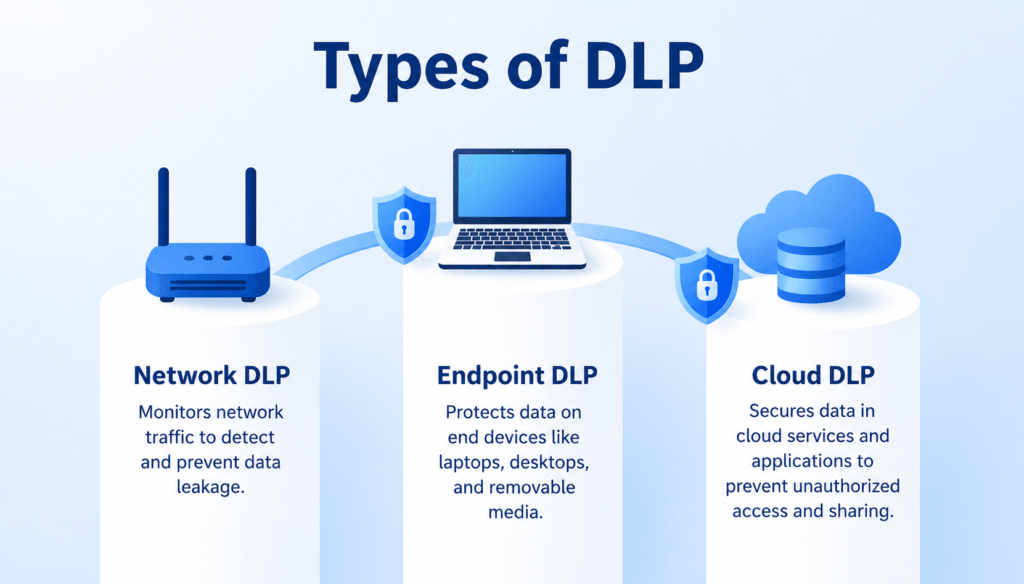
Network DLP Solutions
Network DLP monitors data in motion across your infrastructure. These systems analyze traffic flowing through network gateways. They protect data transfers through email, web uploads, and messaging applications.
Organizations install network DLP at strategic points. Gateway appliances inspect outbound traffic before it leaves the network. This prevents sensitive information from reaching unauthorized destinations through any network channel.
Key Features of Network DLP
- Email scanning detects sensitive attachments and message content automatically
- Web filtering prevents uploads to unauthorized cloud services and websites
- Protocol analysis monitors FTP, HTTP, and other data transfer methods
- SSL inspection examines encrypted traffic for hidden data leaks
- Instant messaging monitoring covers Slack, Teams, and similar platforms
Endpoint DLP Protection
Endpoint DLP secures data on individual devices. This includes laptops, desktops, mobile phones, and tablets. The software runs directly on each device to monitor local activities.
Remote work makes endpoint DLP increasingly important. Employees access sensitive data from home networks and public WiFi. Endpoint protection works regardless of network location or connectivity status.
Endpoint DLP Capabilities
Advanced endpoint solutions provide comprehensive local protection. They monitor file operations, clipboard activities, and peripheral device usage. Organizations control how users interact with sensitive information on their devices.
- USB port control prevents data copying to external drives
- Print monitoring tracks physical document creation
- Screen capture blocking protects displayed information
- Application control restricts unauthorized software access
- Offline protection works without network connectivity
Cloud DLP Solutions
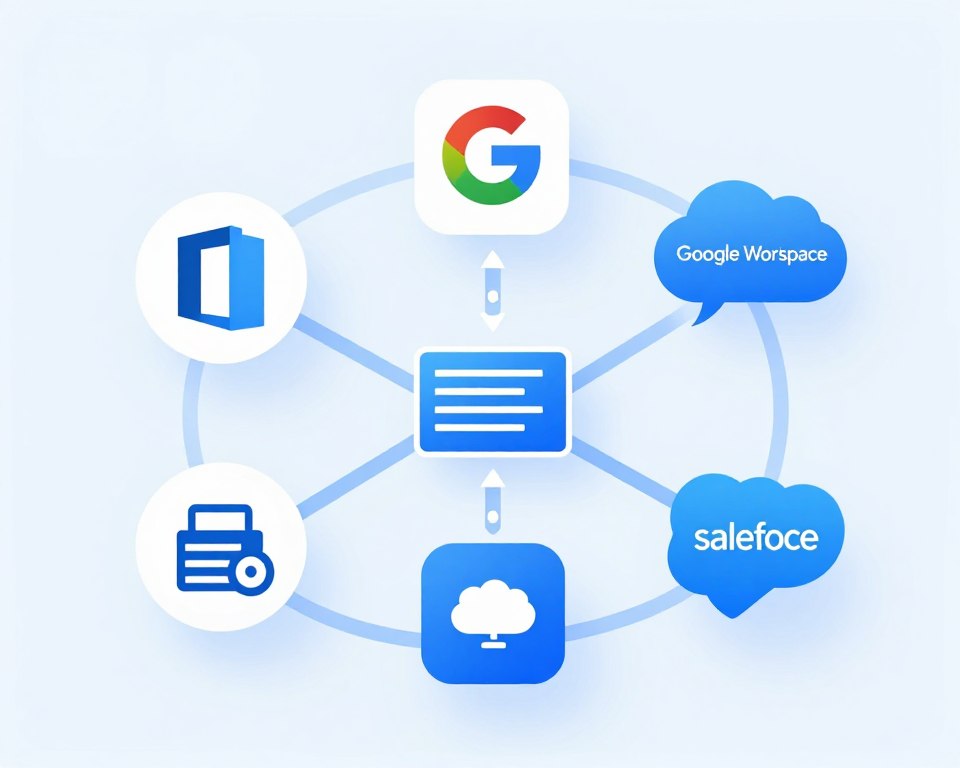
Cloud DLP protects data stored in SaaS applications. Organizations use cloud services for collaboration, storage, and business operations. Cloud DLP integrates with platforms like Microsoft 365, Google Workspace, and Salesforce.
These solutions monitor data accessed through cloud applications. They apply security policies consistently across hybrid environments. Cloud DLP handles data protection regulation requirements for information stored outside traditional networks.
Cloud DLP Benefits
Organizations gain several advantages with cloud-based data loss prevention. These systems scale automatically with growing cloud usage. They provide visibility into shadow IT and unauthorized application usage.
Integrated DLP Platforms
Modern organizations need protection across all environments. Integrated DLP platforms combine network, endpoint, and cloud capabilities. This unified approach provides consistent policies and centralized management.
Single platforms reduce complexity and gaps in coverage. Security teams manage all DLP functions through one interface. This improves visibility into data movement across the entire organization.
Common Data Loss Prevention Use Cases
Preventing Accidental Data Exposure
Employees accidentally leak sensitive data every day. Someone emails a confidential document to the wrong recipient. Another person uploads proprietary information to personal cloud storage. These mistakes create serious security risks.
DLP solutions catch these errors before damage occurs. The system scans outbound communications automatically. It blocks transmissions containing sensitive information to unauthorized destinations. Users receive immediate feedback about policy violations.
Real-World Scenarios
Email Misdirection
An employee composes an email with customer financial data. They accidentally select an external contact with a similar name. DLP detects the sensitive content and prevents delivery to the unauthorized recipient.
- Scans email recipients against approved lists
- Identifies sensitive attachments and content
- Blocks or quarantines suspicious messages
- Notifies sender about policy violation
Cloud Upload Protection
An employee attempts uploading work files to personal Dropbox. The endpoint DLP agent detects proprietary information. It blocks the upload and logs the incident for security review.
- Monitors cloud service usage
- Identifies unauthorized applications
- Prevents data copying to personal accounts
- Provides visibility into shadow IT
Regulatory Compliance Management
Data protection regulations impose strict requirements on organizations. The General Data Protection Regulation mandates specific controls for personal information. India’s DPDPA establishes similar obligations for companies handling citizen data.
DLP solutions help organizations meet compliance requirements. They identify regulated data types automatically. Systems enforce controls mandating how employees handle personal information. Detailed audit logs demonstrate compliance to regulators.
Compliance Applications
- GDPR compliance for protecting EU citizen data and demonstrating accountability
- DPDPA adherence for organizations processing Indian personal data
- PCI DSS requirements for securing credit card information during transactions
- HIPAA compliance in healthcare for protecting patient medical records
- SOX compliance for financial data integrity and access controls
Insider Threat Detection
Insider threats pose significant risks to organizations. Disgruntled employees may steal data before leaving. Careless workers ignore security policies. Compromised accounts provide attackers with legitimate credentials.
Data loss prevention identifies suspicious insider activities. Systems monitor user behavior patterns continuously. Unusual data access or large file transfers trigger alerts. Security teams investigate anomalies before breaches occur.
Insider Threat Indicators
Data Hoarding
Employees accessing large volumes of files outside normal job functions. DLP tracks unusual download patterns and flags excessive data collection activities.
After-Hours Access
Sensitive data accessed during unusual times or from unexpected locations. User behavior analytics identify deviations from established patterns automatically.
Exfiltration Attempts
Large data transfers to personal accounts or external services. DLP blocks unauthorized transmissions and generates high-priority security alerts.
Intellectual Property Protection
Organizations invest heavily in developing proprietary information. Product designs, source code, and business strategies represent competitive advantages. Losing intellectual property damages market position and revenue.
DLP solutions safeguard these critical assets. Organizations classify intellectual property with appropriate security labels. Systems prevent unauthorized copying, transmission, or storage of protected materials.
Third-Party Risk Management
Business partners and contractors often need accessing sensitive data. These relationships create security vulnerabilities. Third parties may have weaker security controls. Their employees might accidentally expose your information.
Data loss prevention extends protection to partner interactions. Organizations grant limited access to specific data sets. DLP monitors third-party activities and enforces restrictions. Systems prevent sensitive information from leaving controlled environments.
Implementing Data Loss Prevention Successfully
Successful DLP implementation requires careful planning and execution. Organizations must balance security requirements with operational efficiency. A structured approach ensures effective protection without disrupting business processes.
Assessment and Planning Phase
Start by understanding your current data landscape. Organizations need identifying where sensitive data resides. This inventory covers file servers, databases, cloud applications, and endpoint devices.
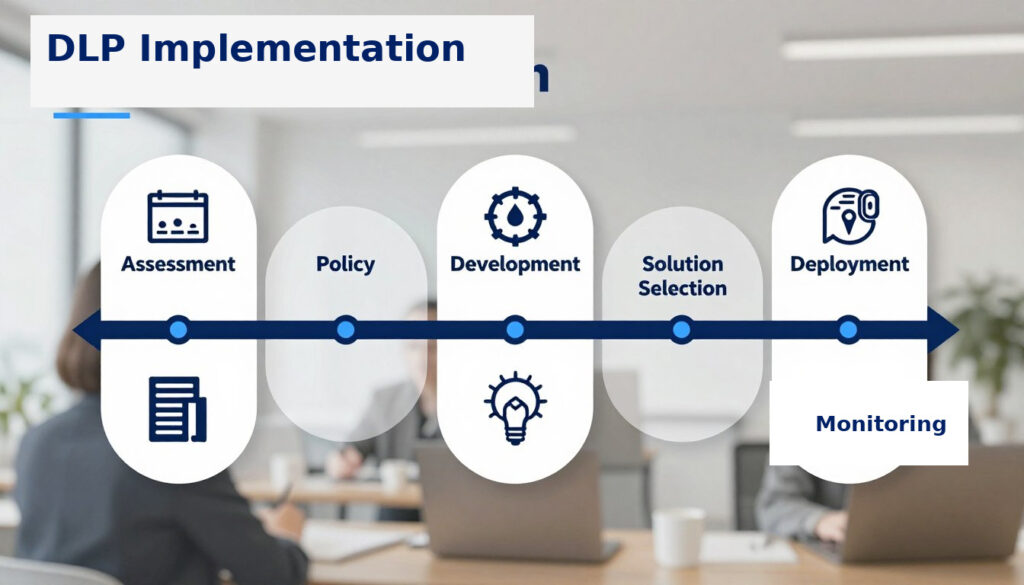
Next, evaluate existing security controls and gaps. Document data flows showing how information moves through systems. Identify high-risk scenarios requiring immediate attention. This assessment guides implementation priorities.
Key Assessment Activities
- Data discovery scans to locate sensitive information across all systems
- Risk analysis identifying highest-value assets and biggest threats
- Regulatory requirement mapping for compliance obligations
- Current security control review and gap identification
- Stakeholder interviews understanding business processes and needs
- Infrastructure evaluation assessing technical readiness
Defining DLP Policies
Clear policies form the foundation of effective data loss prevention. Organizations define what constitutes sensitive data. Policies specify who can access different information types. Rules determine acceptable usage and sharing practices.
Start with broad categories before creating detailed rules. Focus on protecting the most critical data first. Policies should align with business objectives and regulatory requirements. Involve stakeholders from legal, compliance, and business units.
Policy Development Framework
Create a tiered approach to data classification. Different sensitivity levels require different protection measures. This framework helps organizations apply appropriate controls efficiently.
- Public data requires minimal protection and freely shareable
- Internal data needs basic access controls for employee use
- Confidential data demands strict monitoring and encryption
- Restricted data requires highest security and limited access
Best Practice: Begin with monitoring mode before enforcing blocks. This approach identifies false positives and refines policies without disrupting operations.
Solution Selection Criteria
Choosing the right DLP solution depends on organizational needs. Consider deployment models matching your infrastructure. Evaluate features supporting specific use cases. Assess vendor capabilities for long-term partnership.
Evaluation Factors
| Criteria | Considerations | Impact on Success |
| Deployment Model | On-premises, cloud, or hybrid architecture matching infrastructure | High – affects performance and management |
| Detection Accuracy | False positive rates and content inspection capabilities | Critical – determines user productivity impact |
| Integration Support | Compatibility with existing security and business tools | High – enables unified security approach |
| Scalability | Ability to grow with organizational needs | Medium – supports future expansion |
| Management Console | User interface complexity and reporting capabilities | Medium – affects operational efficiency |
| Vendor Support | Technical assistance quality and response times | High – critical for troubleshooting |
Phased Deployment Strategy
Implement DLP gradually to minimize disruption. Start with a pilot program covering limited scope. Monitor results and gather feedback. Refine policies before expanding to additional departments or data types.
This phased approach reduces risks and builds organizational acceptance. Teams learn the system gradually. Technical issues surface in controlled environments. Success stories from early phases encourage broader adoption.
User Training and Change Management
Technology alone doesn’t ensure DLP success. Employees must understand why data protection matters. Training programs explain security policies clearly. Users learn how DLP affects their daily activities.
Effective communication reduces resistance and improves compliance. Emphasize how DLP protects both organization and employees. Provide clear guidance on handling different data types. Create easy channels for questions and policy exceptions.
Key Technologies Behind Data Loss Prevention
Modern DLP solutions leverage advanced technologies for accurate detection. Understanding these capabilities helps organizations select appropriate solutions. Each technology addresses specific aspects of data protection.
Content Analysis Methods
DLP systems use multiple techniques to identify sensitive information. Combining methods improves accuracy and reduces false positives. Organizations configure detection approaches matching their data types and security requirements.
Pattern Matching and Regular Expressions
This technology identifies data following specific formats. Credit card numbers match standard patterns. Social security numbers follow predictable structures. DLP solutions scan content for these recognizable patterns.
Regular expressions provide flexible pattern definitions. Organizations create custom rules for proprietary data formats. This method works well for structured information like account numbers and identification codes.
Keyword and Lexicon Analysis
Simple keyword searches detect restricted terms and phrases. Organizations maintain lists of sensitive words related to projects, products, or confidential information. DLP flags documents containing these keywords.
Advanced lexicon analysis considers context around keywords. This reduces false positives from coincidental word matches. The system evaluates surrounding content to determine actual sensitivity level.
Document Fingerprinting
Fingerprinting creates unique identifiers for specific files. Organizations protect templates, source code repositories, and confidential documents. DLP blocks any transmission of files matching registered fingerprints.
This method works regardless of file modifications. Changing file names or making minor edits doesn’t defeat fingerprint matching. The technology identifies documents even when users attempt disguising them.
Machine Learning and AI Applications
Artificial intelligence enhances DLP capabilities significantly. Machine learning algorithms adapt to evolving threats. These systems improve accuracy through continuous learning from organizational data patterns.
Behavioral Analytics
AI systems establish baseline patterns for normal user behavior. They track typical data access volumes, working hours, and application usage. Machine learning identifies anomalies indicating potential security incidents.
These capabilities detect insider threats that rule-based systems miss. Behavioral analytics recognize subtle changes suggesting compromised accounts or malicious intent.
Content Classification
Machine learning automates data classification processes. Models learn to categorize documents based on content characteristics. This reduces manual classification workload while improving consistency.
AI-powered classification adapts to new document types automatically. Systems recognize sensitive information without requiring explicit rules for every scenario.
Encryption and Data Protection
DLP integrates with encryption technologies for comprehensive protection. Sensitive data gets encrypted automatically based on classification. This ensures information remains protected even if controls are bypassed.
Rights management technologies work alongside DLP solutions. They control what users can do with protected documents. Recipients cannot print, forward, or copy content from restricted files.
Integration Points
- Email encryption for automatically protecting sensitive messages
- File encryption applying protection based on content classification
- Database encryption securing sensitive information at rest
- Cloud encryption protecting data stored in SaaS applications
- Endpoint encryption safeguarding information on devices
Identity Access Management Integration
Combining DLP with identity access management creates powerful security. IAM systems authenticate users and manage permissions. DLP enforces additional controls based on data sensitivity and user context.
This integration enables attribute-based access control. Systems evaluate multiple factors before allowing data access. User role, location, device security, and data classification all influence decisions.
The combination strengthens zero-trust security models. Every data access request undergoes verification. Users prove their identity and demonstrate legitimate need before accessing sensitive information.
Benefits of Implementing Data Loss Prevention
Organizations gain numerous advantages from effective DLP programs. These benefits extend beyond preventing breaches. Comprehensive data loss prevention improves overall security posture and operational efficiency.
Enhanced Security Posture
DLP solutions provide visibility into data movement across organizations. Security teams understand how employees handle sensitive information. This knowledge identifies risks and enables proactive threat mitigation.
Breach Prevention
Stop data leaks before they occur. DLP blocks unauthorized transmissions automatically. Organizations prevent costly incidents that damage reputation and trigger regulatory penalties.
Threat Detection
Identify insider threats and compromised accounts quickly. Behavioral analytics flag suspicious activities for investigation. Early detection minimizes potential damage from security incidents.
Risk Reduction
Reduce overall security risk through consistent policy enforcement. Automated controls eliminate human error. Organizations maintain security standards across all environments.
Regulatory Compliance Support
Meeting data protection regulations requires demonstrable controls. DLP solutions provide technical safeguards mandated by laws. Detailed audit logs prove compliance to regulators and customers.
Organizations face severe penalties for non-compliance. The General Data Protection Regulation imposes fines up to 4% of annual revenue. India’s DPDPA creates similar obligations. DLP helps avoid these costly violations.
Compliance Advantages
- Automated identification of regulated data types across all systems
- Enforced controls for handling personal information properly
- Detailed audit trails documenting data access and transfers
- Incident response capabilities for breach notification requirements
- Regular compliance reports for management and auditors
- Demonstrated due diligence in protecting sensitive data
Intellectual Property Protection
Organizations invest heavily in developing proprietary information. Product designs, research data, and business strategies provide competitive advantages. Losing this intellectual property damages market position significantly.
Data loss prevention safeguards these critical assets. Systems prevent unauthorized copying and transmission. Employees cannot accidentally or intentionally leak valuable information to competitors.
Operational Efficiency Gains
Mature DLP programs streamline security operations. Automated policy enforcement reduces manual review requirements. Security teams focus on investigating genuine threats rather than routine monitoring.
Clear policies and automated controls improve employee productivity. Workers understand acceptable data handling practices. They receive immediate feedback when actions violate policies. This reduces confusion and support requests.
Customer Trust and Brand Protection
Data breaches severely damage organizational reputation. Customers lose confidence in companies that cannot protect their information. News of incidents spreads quickly through social media.
Effective data loss prevention demonstrates commitment to security. Organizations can assure customers their data receives proper protection. This builds trust and provides competitive differentiation in security-conscious markets.
DLP Implementation Benefits
- Prevents data breaches and unauthorized information disclosure
- Ensures compliance with regulatory requirements
- Protects intellectual property and competitive advantages
- Provides visibility into data movement and usage
- Detects insider threats and compromised accounts
- Reduces security incident response costs
- Builds customer trust through demonstrated security
- Automates policy enforcement consistently
Implementation Challenges
- Initial deployment requires significant planning
- False positives can disrupt user productivity
- Policy development demands cross-functional input
- User training needs ongoing investment
- Complex environments increase implementation difficulty
- Requires continuous policy refinement and tuning
Data Loss Prevention Best Practices
Successful DLP programs follow proven methodologies. These best practices help organizations maximize protection while minimizing operational disruption. Implementing these approaches improves both security effectiveness and user acceptance.
Start with Clear Data Classification
Effective DLP requires understanding what data needs protection. Organizations must classify information based on sensitivity and business value. This classification drives appropriate security controls.
Involve stakeholders from across the business in classification decisions. Legal teams understand regulatory requirements. Business units know which information provides competitive advantage. IT teams assess technical feasibility.
Classification Framework
| Classification Level | Examples | Protection Requirements |
| Public | Marketing materials, press releases, public website content | Minimal controls, freely shareable |
| Internal | Employee directories, general policies, internal communications | Basic access controls, internal use only |
| Confidential | Customer data, financial information, business plans | Strict access controls, encryption, monitoring |
| Restricted | Trade secrets, merger plans, sensitive personal data | Highest security, limited access, comprehensive auditing |
Implement Gradually with Monitoring Mode
Never deploy DLP in full enforcement mode initially. Start with monitoring to understand normal data flows. This approach identifies false positives before they disrupt business operations.
Monitor for several weeks or months depending on organizational complexity. Analyze alerts to refine detection rules. Adjust policies based on legitimate business needs. Gradually enable enforcement for specific policy violations.
Focus on High-Risk Areas First
Prioritize protection for most sensitive data and highest-risk scenarios. Organizations cannot implement comprehensive DLP overnight. Starting with critical areas delivers immediate value and builds momentum.
- Protect financial data and credit card information immediately
- Secure customer personal information for compliance requirements
- Safeguard intellectual property providing competitive advantages
- Monitor employees with access to sensitive systems
- Control endpoints used for remote work access
- Secure email as the most common exfiltration channel
Balance Security with Usability
Overly restrictive DLP policies frustrate users and reduce productivity. Employees find workarounds when legitimate activities are blocked. This undermines security and creates shadow IT risks.
Design policies supporting business processes while maintaining security. Provide clear exception request procedures for legitimate needs. Regularly review blocked actions to identify policy improvements.
Common Mistake: Blocking all cloud storage access prevents legitimate collaboration. Instead, allow approved services while blocking unauthorized alternatives. This maintains productivity while controlling data protection.
Usability Guidelines
- Test policies with representative users before deployment
- Provide clear explanations when blocking actions
- Create streamlined exception request processes
- Monitor user feedback and address concerns promptly
Integrate with Incident Response
DLP alerts require defined response procedures. Organizations need processes for investigating violations. Security teams must distinguish between mistakes and malicious activities.
Develop playbooks for different incident types. Automate initial response steps when possible. Establish escalation procedures for serious violations. Document incidents for compliance and improvement purposes.
Incident Response Workflow
- DLP system detects policy violation and generates alert
- Automated triage evaluates severity based on data type and context
- Security analyst reviews alert details and user history
- Investigation determines if violation was accidental or intentional
- Appropriate remediation action taken based on findings
- Incident documented with lessons learned
- Policies updated if needed to prevent recurrence
Maintain Comprehensive Audit Trails
Detailed logging serves multiple purposes. Audit trails demonstrate compliance to regulators. Logs support security investigations when incidents occur. Historical data helps refine policies over time.
DLP systems should record all policy evaluations, not just violations. Track who accessed what data, when, and from where. Document policy changes and administrative actions. Retain logs according to regulatory and business requirements.
Provide Ongoing User Training
Technology alone doesn’t ensure data protection. Employees must understand their role in security. Regular training reinforces policies and explains rationale behind controls.
Make training relevant to specific job functions. Finance staff need understanding regulations for financial data. Engineers require knowledge about protecting intellectual property. Customize content for different audiences.
Training Program Elements
- Initial onboarding covering data classification and policies
- Role-specific training for employees handling sensitive data
- Regular refresher sessions reinforcing key concepts
- Real-world examples from your organization
- Clear guidance on requesting policy exceptions
- Updates when policies change or new threats emerge
Continuously Monitor and Optimize
DLP programs require ongoing management and refinement. Review effectiveness metrics regularly. Analyze false positive rates and adjust detection rules. Update policies as business needs and threats evolve.
Establish regular review cycles for policy evaluation. Quarterly reviews work well for most organizations. More frequent reviews may be needed during initial deployment. Annual comprehensive assessments ensure alignment with business objectives.
Weekly Activities
- Review high-priority alerts
- Address user exception requests
- Monitor system performance
- Update incident response logs
Monthly Activities
- Analyze false positive trends
- Review policy effectiveness
- Update detection rules
- Generate compliance reports
Quarterly Activities
- Comprehensive policy review
- User training sessions
- Technology assessment
- Stakeholder updates
Common Data Loss Prevention Challenges
Organizations face several obstacles when implementing DLP solutions. Understanding these challenges helps teams prepare appropriate mitigation strategies. Successful programs anticipate difficulties and plan accordingly.
Managing False Positives
False positives represent one of the biggest DLP challenges. Systems flag legitimate activities as policy violations. Users become frustrated when productive work gets blocked unnecessarily.
High false positive rates undermine program credibility. Employees learn to ignore alerts. Security teams waste time investigating non-incidents. Organizations must carefully tune detection rules to minimize false positives.
Reducing False Positives
- Start with conservative policies and gradually increase strictness
- Use multiple detection methods to improve accuracy
- Implement context-aware rules considering user roles and destinations
- Regularly review and refine detection patterns based on feedback
- Whitelist known legitimate activities and trusted destinations
- Leverage machine learning to adapt to organizational patterns
Encrypted Traffic Inspection
Modern applications increasingly use encryption for data transmission. HTTPS protects most web traffic. Messaging applications employ end-to-end encryption. This security improvement complicates DLP monitoring.
Organizations need solutions for inspecting encrypted traffic. SSL inspection technologies decrypt, scan, and re-encrypt communications. However, this approach raises privacy concerns and requires careful implementation.
Cloud and Remote Work Challenges
Traditional network DLP assumes traffic flows through controlled gateways. Cloud applications and remote work change this model. Employees access resources directly from anywhere. Data bypasses traditional network security controls.
Organizations must adapt DLP strategies for hybrid environments. Cloud DLP solutions integrate with SaaS applications. Endpoint protection works regardless of network location. Zero-trust architectures assume no implicit trust based on network position.
Remote Work Considerations
- Endpoint DLP becomes critical for mobile workforce
- VPN connections may impact performance
- Personal devices require BYOD policies
- Home networks lack corporate security controls
- Increased cloud adoption complicates monitoring
Cloud-Specific Challenges
- Shadow IT usage bypasses traditional controls
- API integration requirements vary by service
- Multi-cloud environments increase complexity
- Data residency requirements affect deployment
- Shared responsibility models split security duties
Performance Impact Concerns
DLP inspection adds processing overhead to systems. Content analysis requires computational resources. Organizations worry about impacts on network performance and user experience.
Modern DLP solutions minimize performance impacts through optimization. However, organizations must properly size infrastructure. Testing under realistic load conditions prevents surprises after deployment.
Policy Maintenance Complexity
DLP policies require ongoing maintenance as business evolves. New data types emerge. Regulations change. Business processes adapt. Outdated policies create security gaps or unnecessary restrictions.
Organizations need governance processes for policy management. Regular reviews ensure policies remain relevant. Change management procedures prevent unauthorized modifications. Documentation helps new team members understand policy rationale.
User Resistance and Culture Change
Employees often view DLP as productivity obstacles. Security controls limit flexibility and convenience. Users find creative workarounds when they perceive policies as unreasonable.
Successful programs address cultural aspects alongside technology. Leadership support demonstrates organizational commitment. Clear communication explains security importance. Involving users in policy development builds buy-in.
Building Security Culture
- Executive sponsorship showing leadership commitment to data protection
- Regular communications explaining DLP purpose and benefits
- User feedback channels for reporting policy issues
- Recognition programs rewarding security-conscious behavior
- Transparent exception processes for legitimate needs
- Success stories demonstrating how DLP prevented incidents
Future Trends in Data Loss Prevention
Data loss prevention continues evolving with technological advances. Organizations must stay informed about emerging trends. Understanding future directions helps plan long-term security strategies.
Artificial Intelligence Advancement
Machine learning already enhances DLP capabilities. Future solutions will leverage AI more extensively. Advanced algorithms will better understand context and intent. This improves accuracy while reducing false positives.
Natural language processing will analyze content semantically. Systems will understand meaning rather than just matching patterns. This enables protection of sensitive concepts even without specific keywords. AI-powered DLP adapts automatically to new data types and threats.

Zero-Trust Security Integration
Zero-trust architectures assume no implicit trust. Every access request requires verification regardless of source. DLP becomes integral to zero-trust implementations.
Future DLP solutions will integrate more deeply with identity access management. Systems will make real-time decisions based on multiple factors. User identity, device security, data sensitivity, and behavioral patterns all influence access decisions.
Enhanced Cloud-Native Capabilities
Cloud adoption continues accelerating across organizations. DLP solutions must fully support cloud-native architectures. Future platforms will offer seamless protection across hybrid environments.
API-based integrations will expand to more SaaS applications. Cloud DLP will provide equal visibility to traditional network solutions. Container and serverless environments will receive comprehensive coverage.
Cloud DLP Evolution
- Universal API frameworks supporting any SaaS application
- Automated discovery of shadow IT cloud usage
- Container-aware security for modern application architectures
- Serverless function protection in cloud platforms
- Cross-cloud visibility for multi-cloud environments
- Edge computing protection for distributed processing
Privacy-Enhancing Technologies
Privacy concerns increase as data collection expands. Organizations need technologies protecting privacy while enabling DLP. Future solutions will incorporate privacy-enhancing capabilities.
Homomorphic encryption allows analyzing encrypted data without decryption. Differential privacy adds noise preventing individual identification. These technologies enable security monitoring while preserving privacy rights.
Automated Incident Response
Security teams face overwhelming alert volumes. Automation helps manage this challenge. Future DLP solutions will handle more incident response automatically.
Systems will execute predefined playbooks without human intervention. Machine learning will triage incidents by severity. Automated remediation will contain threats immediately. Human analysts focus only on complex investigations requiring judgment.
Quantum-Safe Data Protection
Quantum computing threatens current encryption methods. Organizations must prepare for post-quantum cryptography. Future DLP solutions will incorporate quantum-resistant algorithms.
Transition to quantum-safe security will happen gradually. DLP vendors will update encryption and hashing functions. Organizations should plan migration strategies for long-term data protection.
Selecting the Right DLP Solution Provider
Choosing appropriate DLP vendors significantly impacts program success. Multiple providers offer solutions with varying capabilities. Organizations must evaluate options against specific requirements.
Enterprise DLP Leaders
Several established vendors dominate enterprise DLP markets. These solutions offer comprehensive capabilities for large organizations. They provide extensive policy options, broad integration support, and mature management platforms.
Evaluation Considerations
Technical Capabilities
- Detection accuracy and methods
- Deployment flexibility
- Scalability for growth
- Integration ecosystem
- Performance optimization
Operational Factors
- Management interface usability
- Reporting capabilities
- Policy complexity
- Administrative overhead
- Training requirements
Business Aspects
- Total cost of ownership
- Vendor financial stability
- Support quality
- Product roadmap
- Customer references
Cloud-Native Solutions
Newer vendors focus specifically on cloud environments. These solutions integrate deeply with major SaaS platforms. They offer advantages for organizations with significant cloud adoption.
Cloud-native DLP deploys quickly without infrastructure requirements. Updates happen automatically without manual intervention. However, organizations must evaluate data residency and privacy implications carefully.
Proof of Concept Testing
Always conduct thorough testing before purchasing DLP solutions. Proof of concept deployments reveal real-world performance. Organizations evaluate detection accuracy, false positive rates, and operational impact.
Test with actual organizational data and use cases. Involve representative users in evaluation. Assess integration with existing security tools. Validate vendor claims about capabilities and performance.
POC Testing Framework
- Define specific evaluation criteria and success metrics
- Create realistic test scenarios matching actual use cases
- Deploy solution in representative environment subset
- Monitor for two to four weeks under normal conditions
- Measure detection accuracy and false positive rates
- Evaluate management interface and reporting capabilities
- Assess performance impact on systems and users
- Verify integration with existing security infrastructure
- Review vendor support responsiveness during testing
- Compare results across multiple vendor solutions
DLP for Regulatory Compliance
Data protection regulations create specific technical requirements. Organizations must implement appropriate safeguards for sensitive information. DLP solutions help meet these compliance obligations across multiple frameworks.
General Data Protection Regulation
The General Data Protection Regulation affects organizations worldwide. Any company processing EU citizen data must comply. GDPR requires technical measures protecting personal information throughout processing lifecycles.
DLP supports several GDPR requirements directly. Systems identify personal information automatically. Organizations demonstrate accountability through detailed audit trails. Access controls prevent unauthorized data processing. Encryption protects data transfers across borders.
GDPR Compliance Mapping
| GDPR Requirement | DLP Capability |
| Data Protection by Design | Automated controls built into systems and processes |
| Purpose Limitation | Policies restricting data usage to approved purposes |
| Data Minimization | Detection of excessive personal information collection |
| Storage Limitation | Identification of retained data exceeding retention periods |
| Integrity and Confidentiality | Encryption, access controls, and monitoring |
| Accountability | Comprehensive audit logs and compliance reporting |
Digital Personal Data Protection Act
India’s DPDPA creates new obligations for organizations processing citizen data. The law emphasizes consent, purpose limitation, and data security. Indian businesses must implement appropriate technical safeguards.
Data loss prevention helps Indian organizations meet DPDPA requirements. Systems prevent unauthorized data access and transfers. Organizations demonstrate security measures protecting personal information. Incident detection capabilities support breach notification obligations.
Payment Card Industry Standards
Organizations handling credit card information must comply with PCI DSS. The standard mandates specific controls for protecting cardholder data. DLP solutions address multiple PCI DSS requirements.
Systems identify credit card numbers in unexpected locations. Organizations prevent storing prohibited data elements. DLP monitors and restricts transmission of payment information. This helps maintain PCI DSS compliance across environments.
PCI DSS and DLP
- Requirement 3: Protect stored cardholder data through discovery and encryption
- Requirement 4: Encrypt transmission of data across public networks
- Requirement 7: Restrict access to cardholder data by business need
- Requirement 10: Track and monitor all access to network resources and data
- Requirement 11: Regularly test security systems and processes
Industry-Specific Regulations
Different sectors face unique compliance requirements. Healthcare organizations must protect patient information under HIPAA. Financial institutions comply with various banking regulations. Each industry benefits from DLP capabilities.
DLP solutions adapt to industry-specific needs. Healthcare organizations protect patient medical records. Financial services secure transaction data and customer information. Manufacturing companies safeguard product designs and research data.
Healthcare Compliance
HIPAA requires protecting patient health information. DLP identifies medical records and related data. Systems prevent unauthorized access or disclosure. Organizations demonstrate required safeguards to auditors.
Financial Services
Banking regulations demand strong data security. DLP protects customer financial information. Systems monitor for suspicious account activity. Organizations meet examination requirements through audit logs.
Protecting Your Data with Effective DLP
Data loss prevention has become essential for modern organizations. Sensitive information faces constant threats from cybercriminals, careless employees, and system vulnerabilities. DLP solutions provide comprehensive protection across networks, endpoints, and cloud environments.
Successful implementation requires careful planning and execution. Organizations must understand their data landscape before deploying solutions. Clear policies define appropriate handling of sensitive information. Gradual deployment with monitoring periods minimizes disruption while building effectiveness.
Technology alone doesn’t guarantee data security. Employee awareness and organizational culture play critical roles. Training programs help users understand their responsibilities. Clear communication builds support for security initiatives. Regular reviews ensure programs adapt to evolving needs.
Data protection regulations continue expanding worldwide. The General Data Protection Regulation influences global privacy standards. India’s Digital Personal Data Protection Act creates new compliance obligations. DLP solutions help organizations meet these requirements through automated controls and detailed audit trails.
Looking forward, artificial intelligence will enhance DLP capabilities further. Machine learning improves detection accuracy while reducing false positives. Integration with zero-trust architectures strengthens overall security posture. Cloud-native solutions address modern hybrid work environments effectively.
Atrity Info Solutions understands that organizations can no longer ignore the importance of Data Loss Prevention (DLP). With the growing risks of data breaches, increasing regulatory compliance requirements, and rising customer expectations for data security, implementing a comprehensive DLP strategy has become a business necessity rather than an optional security measure.
At Atrity Info Solutions, we help organizations begin their DLP journey by identifying current security risks and protection gaps. Our team works closely with customers to classify sensitive data, evaluate the right DLP solutions based on infrastructure requirements, and develop effective security policies aligned with business objectives. We also ensure a phased implementation approach to minimize operational impact while providing comprehensive training for both end users and security teams.
An effective Data Loss Prevention strategy safeguards your organization’s most valuable information assets, strengthens customer trust, supports regulatory compliance, and enhances overall business resilience. With Atrity Info Solutions, organizations gain the confidence that their sensitive data remains protected across all environments.
