
 Read More
Cybersecurity threats evolve at unprecedented speed. Organizations face sophisticated attacks targeting sensitive data and critical infrastructure. The need for continuous protection has never been more urgent.
Managed Security Service Providers offer specialized expertise and round-the-clock monitoring. These providers deliver comprehensive security services that many organizations cannot maintain internally. Understanding MSSP capabilities helps businesses make informed protection decisions.
This guide examines managed security service providers in detail. Organizations will discover service offerings, implementation strategies, and provider selection criteria relevant to the Indian market.
Understanding Managed Security Service Providers in Cybersecurity
A Managed Security Service Provider delivers outsourced monitoring and management of security systems and devices. Organizations partner with these specialized firms to enhance their cybersecurity posture without building extensive internal capabilities.
MSSP teams operate Security Operations Centers that provide continuous surveillance of network traffic and security events. These centers employ advanced tools and technologies to identify threats before they cause damage. The managed security approach allows businesses to access enterprise-level protection at predictable costs.
The scope of managed security extends beyond simple monitoring. Providers deliver vulnerability management, incident response, compliance support, and strategic security guidance. This comprehensive approach addresses the full spectrum of cybersecurity requirements organizations face today.
Organizations benefit from expertise accumulated across multiple clients and threat scenarios. Security operations teams maintain current knowledge of emerging attack vectors and defense strategies. This collective intelligence strengthens protection for all clients within the MSSP ecosystem.
Core Components of MSSP Services
Managed detection and response forms the foundation of MSSP offerings. Security analysts monitor environments continuously, investigating anomalies and responding to confirmed incidents. Advanced analytics and threat intelligence enhance detection capabilities beyond traditional signature-based approaches.
Security information and event management systems aggregate data from multiple sources. These platforms correlate events across infrastructure to identify complex attack patterns. The centralized visibility enables faster threat detection and more effective incident response.
- Continuous monitoring of security events across network infrastructure and cloud environments
- Threat detection using behavioral analytics, machine learning algorithms, and threat intelligence feeds
- Incident response services including containment, eradication, and recovery support
- Vulnerability management through regular assessments, prioritization, and remediation guidance
- Compliance management assistance for regulations including GDPR, ISO 27001, and industry standards
- Security device management covering firewalls, intrusion prevention systems, and endpoint protection platforms
How MSSP Differs from Traditional Security Approaches
Traditional security relies on point solutions and reactive responses. Organizations deploy individual security tools without integrated oversight or coordinated response capabilities. This fragmented approach creates visibility gaps that attackers exploit.
Managed security services integrate diverse security technologies into unified operations. The MSSP approach emphasizes proactive threat hunting rather than waiting for alerts. Continuous improvement cycles adapt defenses based on evolving threat landscapes and organizational changes.
Traditional Security Model
- Individual security tools operating independently
- Reactive alert-based response
- Limited visibility across infrastructure
- Resource-intensive internal management
- Periodic vulnerability assessments
MSSP Model
- Integrated security operations platform
- Proactive threat hunting and detection
- Comprehensive infrastructure visibility
- Outsourced expert management
- Continuous security monitoring
Essential Services Provided by Managed Security Service Providers
Managed security encompasses diverse capabilities addressing modern cybersecurity requirements. These services work together to create comprehensive protection frameworks that adapt to organizational needs and threat evolution.
Managed Detection and Response Services
Managed detection response represents advanced threat identification and remediation. Security analysts combine automated tools with human expertise to detect sophisticated attacks. This service extends beyond perimeter defense to monitor endpoints, cloud resources, and network traffic patterns.

Detection capabilities leverage behavioral analytics to identify anomalous activities. Machine learning algorithms establish baseline patterns for normal operations. Deviations trigger investigations that human analysts validate and escalate as needed.
Response procedures follow established playbooks for common scenarios. Analysts contain threats quickly to prevent lateral movement across infrastructure. Detailed incident documentation supports forensic analysis and compliance reporting requirements.
Security Operations Center Monitoring
Security operations centers provide the infrastructure for continuous surveillance. These facilities maintain staffing across all time zones to ensure organizations never face gaps in coverage. Real-time monitoring identifies security events as they occur rather than through delayed batch processing.
SOC analysts triage incoming alerts based on severity and potential impact. Priority classification ensures critical threats receive immediate attention while lower-risk events queue for investigation. This efficient resource allocation maximizes protection within available analyst capacity.
Threat Detection
Advanced analytics identify suspicious activities across endpoints, network traffic, and cloud environments. Correlation engines connect disparate events to reveal complex attack campaigns.
Incident Investigation
Security analysts examine alerts to determine legitimacy and scope. Detailed forensics reveal attack methods, affected systems, and data exposure risks.
Response Coordination
Established procedures guide containment actions and stakeholder communications. Rapid response minimizes damage and accelerates recovery to normal operations.
Vulnerability Management Programs
Regular vulnerability assessments identify weaknesses in systems and applications. Automated scanning tools examine infrastructure for known vulnerabilities and configuration errors. Assessment results prioritize risks based on exploitability and potential business impact.
Remediation guidance helps organizations address identified vulnerabilities efficiently. MSSP teams recommend patches, configuration changes, or compensating controls based on organizational constraints. Progress tracking ensures critical vulnerabilities receive timely resolution.
Threat Intelligence Integration
Threat intelligence provides context about active attack campaigns and adversary techniques. MSSPs aggregate intelligence from multiple sources including industry sharing groups, security vendors, and proprietary research. This information enhances detection rules and informs security strategy decisions.
Intelligence analysis identifies threats relevant to specific industries and geographies. Organizations receive actionable insights rather than overwhelming raw data feeds. Contextual intelligence improves security team efficiency and reduces false positive alerts.
Compliance and Regulatory Support
Compliance management services help organizations meet regulatory requirements. MSSPs maintain expertise in standards including ISO 27001, PCI DSS, HIPAA, and GDPR. This specialized knowledge assists with control implementation and evidence collection for audits.
Continuous compliance monitoring tracks security control effectiveness. Automated reporting demonstrates ongoing adherence to requirements. This documentation streamlines audit processes and reduces compliance program overhead.
Free 30-Minute Security Consultation
Discover how Managed Security Service Providers can protect your organization from evolving cyber threats. Speak with security experts about your specific requirements and learn how managed security services enhance your cybersecurity posture.
Strategic Benefits of Partnering with Managed Security Service Providers
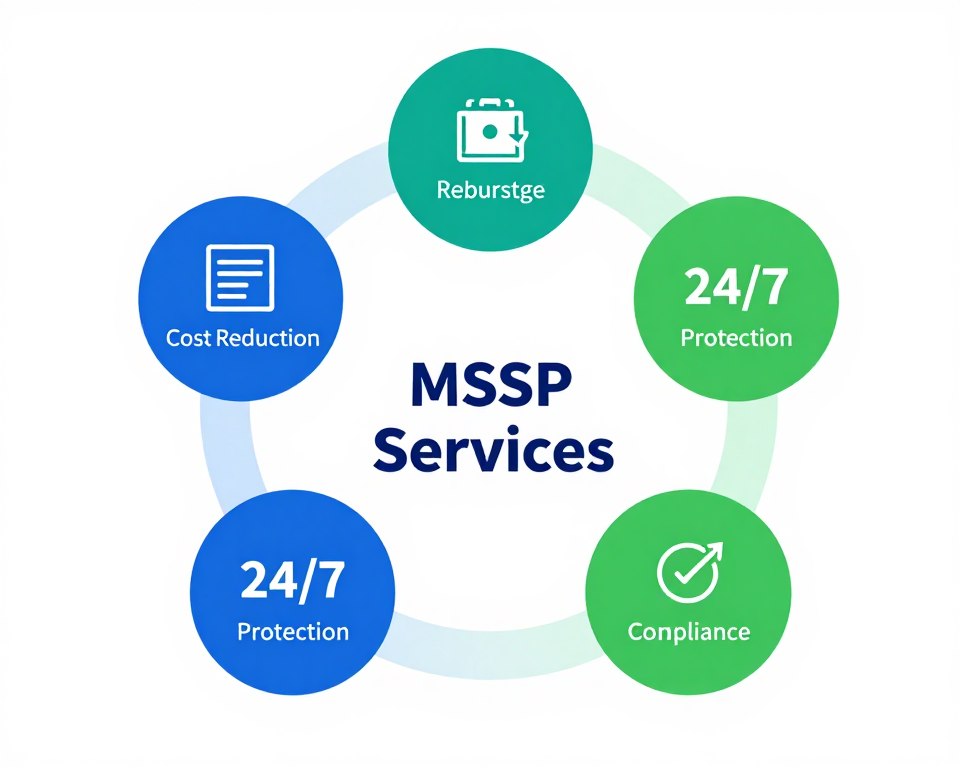
Organizations gain significant advantages through managed security partnerships. These benefits extend beyond technical capabilities to include financial, operational, and strategic improvements in cybersecurity programs.
Access to Specialized Expertise and Experience
Security expertise represents one of the most valuable MSSP benefits. Providers employ teams of specialists with diverse backgrounds covering network security, cloud protection, incident response, and compliance. Organizations access this expertise without recruiting, training, and retaining multiple security professionals.
Experience accumulated across numerous clients and incidents enhances problem-solving capabilities. Security analysts encounter varied attack scenarios and infrastructure configurations. This exposure develops pattern recognition and troubleshooting skills that benefit all clients.
Continuous professional development keeps MSSP teams current with emerging threats. Providers invest in training programs, certification maintenance, and research activities. Organizations benefit from this investment without bearing direct costs or managing professional development programs.
Cost-Effective Security Operations
Building internal security operations centers requires substantial capital investment. Hardware, software licenses, facility infrastructure, and staffing create significant upfront costs. Managed security services convert these capital expenses to predictable operational costs through subscription models.
Shared infrastructure across multiple clients reduces per-organization costs. MSSPs achieve economies of scale for security technologies and personnel. Organizations access enterprise-grade capabilities at fraction of standalone implementation costs.
Internal SOC Costs
- Security technology procurement and licensing
- SOC facility and infrastructure setup
- Recruitment of security analysts and specialists
- Ongoing training and certification programs
- Tool maintenance and upgrade cycles
- Management overhead and operational expenses
MSSP Model Advantages
Managed security eliminates most upfront capital requirements. Organizations pay monthly or annual subscriptions based on service scope and infrastructure size. This predictable pricing model simplifies budgeting and reduces financial risk.
Resource flexibility allows scaling protection as organizations grow. Additional monitoring capacity, enhanced services, or expanded coverage areas adjust through subscription modifications. This elasticity supports business evolution without technology replacement cycles.
Round-the-Clock Protection and Monitoring
Cyber threats operate continuously without regard for business hours or holidays. Security operations require constant vigilance to detect and respond to incidents promptly. MSSP teams provide true coverage across all time zones and calendar periods.
Staffing challenges make internal operations difficult for many organizations. Maintaining adequate coverage requires multiple shifts and backup personnel for absences. Managed security providers solve these staffing complexities through larger analyst pools and established rotation schedules.
Response time improvements result from dedicated security operations focus. MSSP analysts respond to alerts immediately rather than balancing security with other IT responsibilities. This attention reduces attacker dwell time and limits potential damage from security incidents.
Enhanced Security Posture and Risk Reduction
Comprehensive security coverage reduces organizational risk exposure. Managed security services address gaps that attackers commonly exploit. Continuous monitoring, vulnerability management, and threat intelligence create layered defense-in-depth protection strategies.
Proactive threat hunting identifies potential compromises before attackers complete objectives. Security analysts search for indicators of compromise and suspicious activities. This proactive approach prevents data breaches and system damage that reactive security misses.
Regular security assessments evaluate control effectiveness and identify improvement opportunities. Organizations receive objective evaluation of their security posture. Recommendations prioritize investments and activities that provide greatest risk reduction.
Scalability and Flexibility
Business growth drives infrastructure expansion and increased security requirements. Managed security scales naturally to accommodate larger environments and additional locations. Service adjustments happen rapidly without lengthy procurement or deployment cycles.
Technology evolution introduces new platforms requiring protection. Cloud migration, mobile device proliferation, and IoT adoption expand attack surfaces. MSSPs adapt monitoring and protection to emerging technologies as organizations adopt them.
- Rapid deployment of security monitoring for new systems and applications
- Flexible service tiers matching organizational maturity and requirements
- Geographic expansion support across multiple regions and countries
- Technology agnostic approaches protecting diverse infrastructure components
- Seasonal or project-based scaling for temporary requirements
Focus on Core Business Operations
Cybersecurity complexity diverts attention from primary business objectives. Organizations excel when focusing resources on competitive differentiation and customer value. Outsourcing security operations allows this strategic focus while maintaining robust protection.
Internal IT teams redirect efforts toward business-enabling projects. Infrastructure improvements, application development, and user support deliver direct business value. Security responsibility shifts to specialized providers optimized for protection missions.
Executive leadership gains confidence in security program effectiveness. Regular reporting and compliance documentation demonstrate ongoing protection. This assurance reduces board-level concern about cybersecurity risks and regulatory penalties.
Managed Security Service Providers vs Building Internal Security Teams
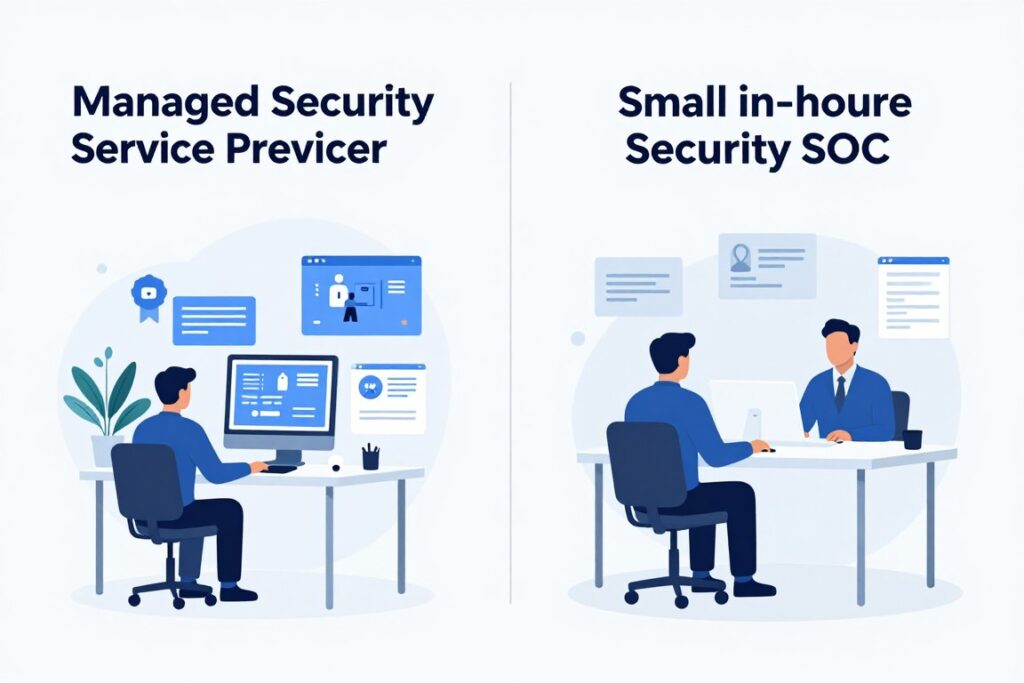
Organizations face critical decisions about security program structure. The choice between managed services and internal capabilities depends on multiple factors including resources, expertise requirements, and strategic priorities.
Cost Comparison Analysis
Financial considerations significantly influence security program decisions. Organizations must evaluate total cost of ownership for both approaches over multi-year periods. Initial investment, ongoing operations, and scalability costs differ substantially between internal and managed models.
| Cost Category | Internal Security Team | Managed Security Services |
| Initial Setup | High capital investment for technology, infrastructure, recruitment | Minimal onboarding costs, rapid deployment |
| Annual Personnel | Multiple analyst salaries, benefits, training costs | Predictable subscription fees covering all personnel |
| Technology Licensing | Direct purchase of security tools and platforms | Included in service fees, provider-managed |
| Training | Ongoing investment in certifications and skills development | Provider responsibility, no direct cost |
| Scalability | Additional hiring and infrastructure for growth | Flexible scaling through service tier adjustments |
Internal security operations demand substantial ongoing investment. Personnel costs dominate budgets as organizations require analysts covering multiple shifts. Technology refresh cycles add periodic capital requirements. Training expenses ensure team skills remain current with evolving threats.
Managed security converts these variable costs to predictable monthly fees. Organizations avoid recruitment challenges and retention risks. Budget forecasting simplifies with stable pricing structures. Additional services or expanded coverage adjust subscriptions without budget disruptions.
Expertise and Capability Considerations
Security expertise scarcity challenges organizations building internal teams. Qualified analysts receive competitive offers from multiple employers. Smaller organizations struggle to attract talent against larger competitors and specialized security firms.
Skill diversity requirements compound recruitment challenges. Comprehensive security programs need network security, cloud protection, forensics, and compliance expertise. Building teams with this breadth requires recruiting multiple specialists or accepting capability gaps.
Managed security providers maintain deep specialist benches across all required disciplines. Organizations access this expertise immediately without recruitment delays. Specialist consultations happen routinely rather than requiring external engagement.
MSSP Advantages
- Immediate access to diverse security expertise and specialized skills
- Established processes and procedures from industry best practices
- Continuous service coverage without staffing gaps or absences
- Shared threat intelligence across multiple client environments
- Regular capability updates as provider enhances platforms
- Reduced risk of knowledge loss from employee turnover
Internal Team Advantages
- Deep organizational knowledge and business context understanding
- Direct control over priorities, processes, and response procedures
- Integration with existing IT operations and workflows
- Custom tool selection aligned with specific requirements
- On-premise data retention for sensitive information
- Long-term capability development building institutional knowledge
Response Time and Service Level Expectations
Incident response speed determines potential damage from security events. Internal teams offer immediate escalation to organizational leadership. However, limited staffing may delay investigation during off-hours or high-volume periods.
MSSPs provide contractual service level agreements defining response times. Organizations gain predictability about initial response, escalation procedures, and resolution expectations. These commitments ensure consistent service quality regardless of time or circumstances.
Geographic distribution affects response capabilities for organizations with multiple locations. Internal teams typically concentrate in headquarters locations. Managed security operations provide consistent coverage across all sites through centralized monitoring.
Hybrid Approaches Combining Both Models
Many organizations adopt hybrid security models balancing internal and managed capabilities. Strategic functions remain internal while operational monitoring outsources to MSSPs. This approach optimizes resource allocation and maintains critical internal expertise.
Internal security architects define strategy, policies, and requirements. They provide business context and priority guidance to managed service providers. This partnership combines organizational knowledge with operational scale and expertise.
- Internal leadership setting security strategy and governance frameworks
- MSSP providing monitoring, detection, and initial incident response
- Internal teams handling major incidents requiring business decisions
- Shared responsibility for vulnerability management and remediation
- Collaborative threat intelligence analysis and defense improvement
Hybrid models evolve as organizational capabilities mature. Organizations may start with comprehensive managed services and gradually build internal capacity. Alternatively, existing internal teams augment with managed services for specialized capabilities or coverage gaps.
Get Your Free Security Posture Assessment
Uncertain whether managed security services fit your organization? Security experts will evaluate your current infrastructure and provide tailored recommendations comparing internal and managed approaches for your specific environment and requirements.
How Organizations Select the Right Managed Security Service Provider
Provider selection significantly impacts security program effectiveness. Organizations must evaluate multiple factors to identify partners aligned with technical requirements, business objectives, and cultural fit. Structured evaluation processes improve selection outcomes and establish successful long-term partnerships.

Essential Evaluation Criteria
Technical capabilities form the foundation of MSSP assessment. Organizations should examine security technologies, detection methodologies, and incident response procedures. Understanding provider infrastructure, redundancy, and disaster recovery ensures continuous service availability.
Industry experience and client references provide insight into provider reliability. Organizations benefit from selecting MSSPs with relevant industry knowledge and regulatory familiarity. Client testimonials reveal service quality and partnership dynamics beyond marketing materials.
Technical Capabilities
Evaluate security technologies, detection methods, and response procedures.
- Security tool ecosystem and platform integrations
- Threat intelligence sources and analysis capabilities
- Incident response procedures and escalation protocols
- Infrastructure redundancy and business continuity
Service Coverage
Assess monitoring scope and protection breadth across infrastructure.
- Network, endpoint, and cloud monitoring capabilities
- Application security and database protection options
- Geographic coverage and local presence
- Service hour availability and response times
Compliance Support
Verify regulatory expertise and compliance program assistance.
- Relevant regulation and standard knowledge
- Audit support and evidence collection
- Compliance reporting and documentation
- Control implementation guidance
Partnership Approach
Consider communication style, transparency, and collaboration model.
- Reporting frequency and detail level
- Escalation procedures and contact accessibility
- Strategic consultation and advisory services
- Contract flexibility and service customization
Service Level Agreement Requirements
Service level agreements define performance expectations and accountability. Organizations should establish clear metrics for response times, resolution targets, and availability commitments. SLA terms create measurable standards for evaluating ongoing service quality.
Financial penalties for SLA breaches ensure provider accountability. However, organizations should emphasize performance consistency over penalty collection. Realistic SLAs balance ambitious goals with practical operational constraints.
- Initial alert response time commitments
- Incident escalation thresholds and procedures
- System availability guarantees and uptime requirements
- Report delivery schedules and content specifications
- Vulnerability assessment frequency and coverage
- Communication protocols during major incidents
Critical SLA Components
- Mean time to detect security incidents
- Mean time to respond to confirmed threats
- False positive rates for security alerts
- Threat intelligence accuracy and relevance
- Customer satisfaction survey results
- Compliance audit success rates
Performance Metrics
Questions to Ask Potential Providers
Structured questioning during provider evaluation reveals capabilities and partnership fit. Organizations should prepare comprehensive question lists covering technical, operational, and business topics. Responses demonstrate provider expertise and highlight potential concerns.
- How does your Security Operations Center structure ensure continuous monitoring coverage?
- What security technologies and platforms form your detection and response capabilities?
- Can you provide examples of incident response procedures for common attack scenarios?
- How do you customize services for different industries and regulatory requirements?
- What threat intelligence sources inform your detection rules and hunting activities?
- How frequently do you provide security reports and what information do they contain?
- What is your analyst-to-client ratio and how does this affect service quality?
- How do you handle geographic expansion and multi-region protection requirements?
- What training and certifications do your security analysts maintain?
- Can you describe your typical onboarding process and deployment timeline?
- How do you integrate with existing security tools and IT infrastructure?
- What happens if our organization needs to terminate the service agreement?
Onboarding and Implementation Process
Successful MSSP partnerships require smooth onboarding and integration. Organizations should understand deployment timelines, resource requirements, and milestone deliverables. Clear project planning prevents delays and establishes realistic expectations.
Initial assessment phases inventory existing security infrastructure and identify integration requirements. MSSPs configure monitoring tools, establish baseline behaviors, and tune detection rules. This preparation phase determines long-term service effectiveness.
Training and knowledge transfer ensure internal teams understand escalation procedures and reporting. Organizations should document communication protocols, emergency contacts, and routine interaction cadences. These foundations support effective ongoing collaboration.
Leading Managed Security Service Providers Serving Indian Organizations
The Indian cybersecurity market features numerous managed security providers with varying capabilities and specializations. Organizations benefit from understanding provider strengths, service focus areas, and market positioning when evaluating partnership options.
Atrity’s Managed Security Services
Atrity delivers comprehensive managed security services tailored for Indian organizations. The provider emphasizes security awareness training alongside traditional monitoring and response capabilities. This holistic approach recognizes that employee education complements technical controls for complete protection.
The company offers customized security programs addressing specific industry requirements. Organizations receive dedicated account management and strategic security consultation. Atrity’s approach combines managed security services with advisory support helping organizations mature their overall cybersecurity posture.
Service Highlights
- 24/7 Security Operations Center monitoring and threat detection services
- Comprehensive employee security awareness training programs
- Vulnerability management and penetration testing services
- Incident response and forensic investigation capabilities
- Compliance support for Indian and international regulations
- Cloud security monitoring across major platforms
Organizations partnering with Atrity gain access to experienced security professionals understanding the Indian threat landscape. The provider maintains current knowledge of regional attack trends and regulatory requirements affecting businesses operating in India.
Global MSSP Providers with Indian Presence
Several international managed security service providers maintain operations serving Indian organizations. These providers offer global scale, extensive resources, and proven methodologies developed across worldwide client bases.
Cipher Managed Security
Cipher provides diversified managed security portfolios including 24/7 SOC services. The provider works with client legacy technologies while offering advanced modern security solutions. Flexible engagement models accommodate various organizational sizes and requirements.
Trustwave
Trustwave specializes exclusively in security services without general IT offerings. This focused approach delivers deep security expertise across threat detection, vulnerability management, and compliance. The provider serves organizations requiring specialized security attention.
Broadcom Symantec Enterprise
Symantec Enterprise Cloud by Broadcom leverages global technology infrastructure for managed security delivery. The provider combines extensive security research capabilities with operational services. Organizations benefit from threat intelligence derived from worldwide telemetry.
Selecting Providers for Specific Requirements
Organizations should align provider selection with specific security needs and business characteristics. Small to medium enterprises often prioritize cost efficiency and straightforward service delivery. Enterprise organizations may require extensive customization and integration capabilities.
Industry specialization influences provider suitability for regulated sectors. Organizations in financial services, healthcare, or government benefit from MSSPs with relevant compliance expertise. These providers understand sector-specific threats and regulatory requirements.
Geographic considerations affect service delivery for organizations with distributed operations. Providers with local presence offer better understanding of regional requirements. However, global providers bring threat intelligence and resources from worldwide operations.
Best Practices for Implementing Managed Security Service Providers
Successful MSSP implementation requires careful planning and clear expectations. Organizations must prepare infrastructure, define responsibilities, and establish communication frameworks. These foundational elements determine partnership effectiveness and security program success.
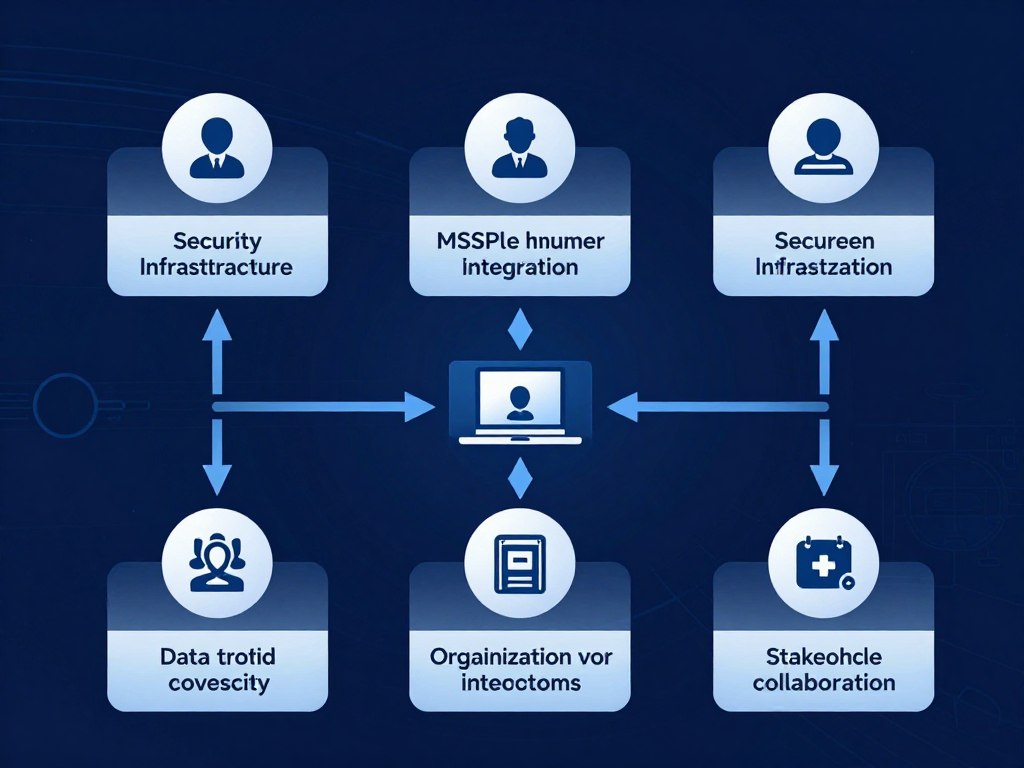
Defining Clear Service Scope and Expectations
Ambiguous scope creates conflicts and service gaps. Organizations should document specific systems, applications, and infrastructure components requiring protection. Geographic locations, business units, and excluded systems need explicit identification.
Service expectations must align with provider capabilities and contractual commitments. Organizations should distinguish between standard services and additional offerings requiring separate arrangements. This clarity prevents misunderstandings about coverage and response procedures.
Stakeholder alignment ensures all parties understand managed security objectives. Internal IT teams, business leaders, and MSSP personnel should share common understanding of goals. Regular expectation reviews accommodate changing requirements and organizational evolution.
Establishing Communication Protocols
Effective communication supports rapid incident response and ongoing collaboration. Organizations should designate primary contacts for routine and emergency situations. Escalation procedures define when and how critical issues reach executive leadership.
Reporting cadences establish regular information flow between providers and organizations. Weekly operational reports track ongoing security activities and alert volumes. Monthly strategic reports examine trends, recommendations, and program effectiveness.
- Daily alert summaries for high-volume environments
- Weekly operational reports covering activities and investigations
- Monthly strategic reviews examining trends and improvements
- Quarterly business reviews with executive stakeholders
- Immediate notification procedures for critical incidents
- Regular testing of emergency communication channels
Integration with Existing Security Infrastructure
MSSP services complement existing security investments rather than replacing all tools. Organizations should identify integration points between current infrastructure and managed services. API connections, log forwarding, and alert sharing maximize investment value.
Technology compatibility affects integration complexity and effectiveness. Organizations should disclose all security tools, network devices, and cloud platforms. Providers assess compatibility and recommend necessary adjustments or additions.
Phased implementation reduces disruption and allows gradual capability building. Organizations might begin with perimeter monitoring before expanding to endpoints and cloud environments. This approach manages change while delivering immediate value.
Conducting Regular Security Reviews
Periodic reviews ensure managed security services deliver expected value. Organizations should examine key performance indicators, incident trends, and program effectiveness. These assessments identify improvement opportunities and validate security investments.
Threat landscape evolution requires continuous service adaptation. Annual reviews should reassess threat models, protection priorities, and coverage gaps. Organizations adjust services to address emerging risks and changing business requirements.
Provider performance evaluation maintains service quality and accountability. Organizations should measure SLA compliance, response effectiveness, and communication quality. Constructive feedback helps providers improve service delivery.
Regular Review Components
Organizations should establish structured review processes covering technical performance, business alignment, and relationship quality. These assessments ensure managed security investments continue delivering appropriate value as threats and organizations evolve.
Maintaining Internal Security Capabilities
Managed services do not eliminate all internal security responsibilities. Organizations retain accountability for security decisions, policy development, and risk acceptance. Internal teams provide business context and priority guidance to managed service providers.
Security awareness programs remain organizational responsibilities. Employees need regular training on phishing, social engineering, and secure practices. MSSPs may offer training services, but organizations must ensure workforce participation and competency.
Incident response includes business decisions beyond technical remediation. Organizations determine notification requirements, legal considerations, and communication strategies. Internal leadership makes these judgment calls with MSSP technical support.
Emerging Trends Shaping Managed Security Service Providers
The managed security industry continues evolving with technological advancement and threat sophistication. Organizations benefit from understanding emerging trends that will shape future service delivery and capabilities. Forward-looking providers invest in these areas to maintain competitive advantages.

Artificial Intelligence and Machine Learning Integration
AI technologies enhance threat detection by identifying subtle attack patterns. Machine learning algorithms analyze vast data volumes exceeding human analyst capacity. These capabilities improve detection accuracy while reducing false positive rates that overwhelm security teams.
Automated response systems handle routine incidents without human intervention. Predefined playbooks guide AI systems through containment and remediation procedures. Analysts focus on complex investigations requiring judgment and creativity.
Natural language processing improves security reporting and communication. AI systems generate executive summaries from technical findings. This capability bridges communication gaps between security teams and business leadership.
Extended Detection and Response Capabilities
Extended detection and response (XDR) platforms unify security data across multiple sources. These systems correlate events from endpoints, networks, cloud services, and applications. Comprehensive visibility reveals attack chains that siloed tools miss.
MSSPs increasingly adopt XDR platforms for client monitoring. Organizations benefit from integrated detection without managing complex platform deployments. Provider expertise maximizes XDR value through proper configuration and analysis.
Cloud-Native Security Operations
Cloud adoption drives security operations transformation. Organizations require protection for multi-cloud environments spanning AWS, Azure, and Google Cloud. MSSPs develop cloud-native capabilities addressing these distributed architectures.
Container security and serverless protection expand MSSP service portfolios. Modern application architectures require specialized monitoring approaches. Providers invest in tools and expertise for cloud-native technology stacks.
Security posture management helps organizations configure cloud environments securely. MSSPs monitor for misconfigurations and compliance drift. Automated remediation capabilities fix common issues before exploitation.
Zero Trust Architecture Support
Zero trust principles reshape security approaches emphasizing continuous verification. Organizations move away from perimeter-focused security toward identity and access controls. MSSPs support zero trust implementations through monitoring and validation services.
Identity and access management monitoring detects credential compromise and privilege abuse. Behavioral analytics identify anomalous access patterns indicating account takeover. These capabilities complement zero trust architecture deployments.
Threat Intelligence Sharing and Collaboration
Industry collaboration improves collective defense against common adversaries. Information sharing groups exchange threat indicators and attack techniques. MSSP participation in these communities benefits all clients through enhanced intelligence.
Automated threat intelligence platforms streamline indicator consumption and action. Security systems automatically block malicious infrastructure identified by sharing communities. This collective defense approach scales protection beyond individual organization capabilities.
Frequently Asked Questions About Managed Security Service Providers
What is the difference between MSSP and traditional IT support services?
MSSPs specialize exclusively in cybersecurity monitoring, threat detection, and incident response. Traditional IT support focuses on general technology operations including help desk, infrastructure maintenance, and application support. While IT services keep systems running, managed security services protect those systems from cyber threats through continuous monitoring and specialized security expertise.
How quickly can an MSSP detect and respond to security incidents?
Response times vary based on incident severity and service level agreements. Critical threats typically receive initial response within 15-30 minutes. MSSP analysts investigate alerts continuously, escalating confirmed incidents immediately. Mean time to detect (MTTD) for quality providers ranges from minutes to hours depending on attack sophistication. Organizations should review specific SLA commitments during provider selection.
Do organizations need to replace existing security tools when partnering with an MSSP?
Most MSSPs integrate with existing security infrastructure rather than requiring complete replacement. Providers work with firewalls, endpoint protection, and SIEM platforms already deployed. However, capability gaps or incompatible technologies may necessitate selective upgrades. Organizations should discuss current tools during evaluation to understand integration requirements and potential modifications.
How do MSSPs handle data privacy and confidentiality concerns?
Reputable MSSPs implement strict data protection controls and confidentiality agreements. Security monitoring analyzes metadata and logs rather than accessing sensitive business content. Providers maintain certifications including ISO 27001 demonstrating robust information security practices. Organizations should review provider security policies, data handling procedures, and compliance certifications before engagement.
What size organizations benefit most from managed security services?
Organizations of all sizes gain value from managed security, though specific benefits vary. Small to medium enterprises access enterprise-grade capabilities impossible to build internally. Large organizations augment internal teams with additional capacity and specialized skills. Organizations facing resource constraints, compliance requirements, or sophisticated threats particularly benefit from MSSP partnerships regardless of size.
How do organizations measure managed security service effectiveness?
Effectiveness measurement combines multiple metrics including threat detection rates, incident response times, false positive reduction, and compliance maintenance. Organizations should track mean time to detect, mean time to respond, and security incident trends. Periodic penetration testing validates protection effectiveness. Regular business reviews examine these metrics and overall security posture improvements.
Making Informed Decisions About Managed Security Service Providers
Cybersecurity threats demand sophisticated defenses that many organizations cannot build independently. Managed Security Service Providers offer specialized expertise, continuous monitoring, and rapid incident response capabilities. These services transform security operations from reactive fire-fighting to proactive threat management.
Organizations evaluating managed security options must assess provider capabilities against specific requirements. Technical competence, industry experience, and cultural fit all influence partnership success. Thorough evaluation processes identify providers aligned with security objectives and business constraints.

Implementation success depends on clear expectations, defined responsibilities, and ongoing communication. Organizations remain accountable for security strategy while providers deliver operational excellence. This partnership model balances organizational control with specialized operational capabilities.
The managed security landscape continues evolving with emerging technologies and threats. Organizations benefit from providers investing in AI capabilities, cloud-native security, and threat intelligence sharing. Forward-looking partnerships position organizations to adapt as cybersecurity requirements change.
Financial considerations favor managed services for most organizations. Predictable subscription costs replace variable internal expenses and capital investments. Organizations redirect resources toward core business activities while maintaining robust security protection.
Indian organizations face unique cybersecurity challenges requiring localized expertise and global capabilities. Managed security providers combine understanding of regional threats with worldwide intelligence and resources. This combination delivers protection appropriate for organizations operating in India’s dynamic business environment.
“Effective cybersecurity requires continuous vigilance that exceeds most organizations’ internal capabilities. Managed security partnerships provide this constant protection while allowing businesses to focus on their primary missions. The question is not whether to use managed services, but rather which provider best aligns with organizational needs.”
Organizations should begin managed security evaluations by assessing current protection gaps and resource constraints. Understanding these factors clarifies requirements and selection criteria. Structured evaluation processes identify providers offering optimal capability combinations for specific situations.
Security represents shared responsibility between organizations and managed service providers. Successful partnerships establish clear boundaries, regular communication, and mutual accountability. These relationships deliver security improvements exceeding what either party achieves independently.
Connect with Atrity’s Security Experts
Organizations seeking comprehensive managed security guidance benefit from expert consultation. Atrity’s security professionals assess current protection levels and recommend tailored improvement strategies. This consultation helps organizations make informed decisions about managed security investments.
Schedule Your Security Consultation Today
Discuss your organization’s security requirements with experienced professionals. Atrity provides objective assessments and practical recommendations for implementing effective managed security programs aligned with business objectives and budget constraints.
Prefer speaking directly? Call security consultants now:
What Happens After Submission?
Security consultation requests receive responses within one business day. Atrity’s team reviews submitted information and schedules convenient consultation times. Initial discussions explore current security posture, specific challenges, and potential solutions. Organizations receive objective assessments without sales pressure or obligations.
