
 Read More
Artificial intelligence emerges as a game-changing force in this digital battlefield. Security professionals now deploy machine learning algorithms to detect threats that would slip past conventional defenses. AI analyzes patterns, predicts attacks, and responds in real time.This technology offers both extraordinary promise and concerning risks. While defenders harness AI to protect networks, malicious actors weaponize the same capabilities to create more dangerous cyber attacks. Understanding this dual nature becomes essential for anyone involved in network security.The cybersecurity landscape now depends heavily on intelligent systems. These tools process millions of security events every day. They identify anomalies that human analysts might miss in the overwhelming flood of network traffic and system logs.
How AI is Revolutionizing Cybersecurity
Modern security challenges demand solutions that can match the speed and sophistication of contemporary threats. Artificial intelligence provides capabilities that transform how organizations defend their digital assets. Machine learning systems now handle tasks that once required large teams of security professionals.
The integration of AI into cybersecurity tools reshapes the entire defense strategy. Organizations now rely on intelligent systems to maintain protection across expanding digital infrastructure. These technologies deliver unprecedented speed and accuracy in threat detection.
Threat Detection and Prevention
Traditional security systems depend on known threat signatures. They compare incoming data against databases of previously identified malware patterns. This approach fails against new attack methods that have never been seen before.
AI-powered threat detection uses behavioral analysis instead. Machine learning algorithms study how normal network traffic behaves. They build baseline models of typical user activities and system operations. Any deviation from these patterns triggers immediate alerts.
These systems excel at identifying zero-day threats. Attackers constantly develop new malware variants to evade signature-based detection. AI spots suspicious behavior even when the specific attack method is completely novel. The system recognizes that something abnormal is happening.
Traditional Detection Methods
- Signature-based scanning
- Rule-based filtering
- Manual log analysis
- Periodic vulnerability scans
- Reactive response approach
Deep learning networks process massive volumes of security data simultaneously. They correlate events across different systems to identify coordinated attack campaigns. A single suspicious login attempt might seem harmless. When combined with unusual file access patterns and network traffic spikes, it reveals a sophisticated intrusion.
Security professionals benefit from dramatically reduced false positives. Early AI systems generated too many alerts about benign activities. Modern algorithms learn to distinguish between genuine threats and normal business operations. This precision allows analysts to focus on real dangers.
Automated Response and SOAR Integration
Speed determines success in cyber defense. Attackers can compromise systems within minutes of initial access. Manual response processes cannot match this velocity. Organizations need automated systems that take action the moment threats appear.
Security Orchestration, Automation, and Response platforms integrate AI capabilities. These tools automatically execute predefined response playbooks when detection systems identify threats. The entire incident response cycle accelerates from hours to seconds.
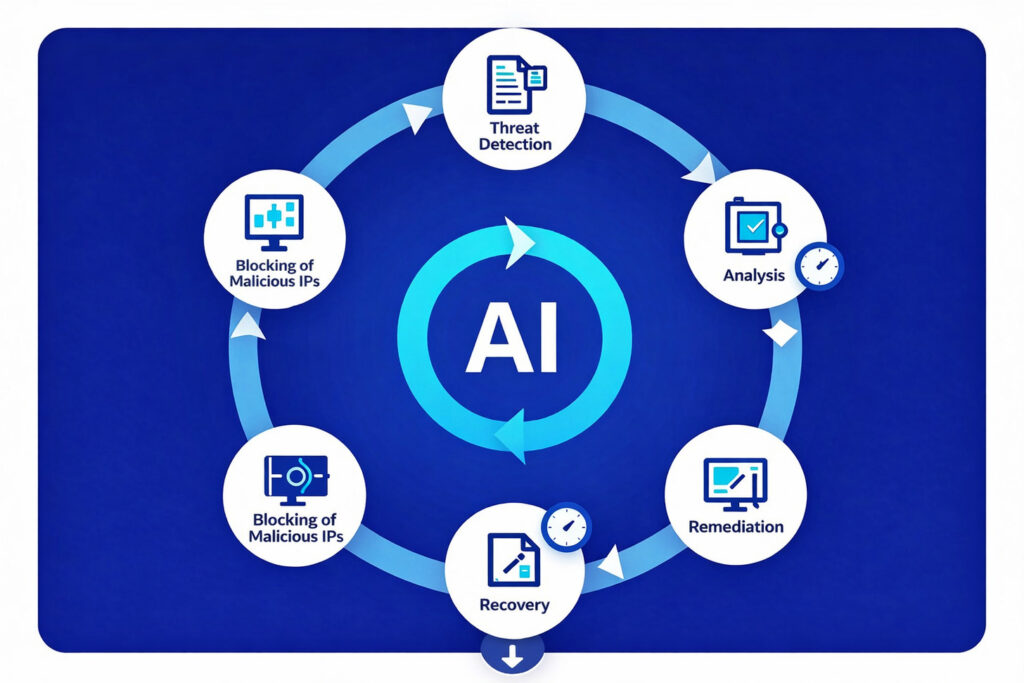
AI enriches security alerts with contextual information automatically. When a potential threat appears, the system gathers related data from multiple sources. It pulls threat intelligence feeds, checks user behavior histories, and examines recent network events. Analysts receive complete context instead of raw alerts.
Containment happens instantly without human intervention. If ransomware begins encrypting files, the AI system can immediately isolate the affected machine from the network. This automatic quarantine prevents malware from spreading to other systems while security teams investigate.
Machine learning improves response strategies over time. The system analyzes which containment actions proved most effective for different threat types. It refines its playbooks based on actual outcomes. Each incident makes the automated response smarter and more precise.
Vulnerability Management
Every software system contains potential security weaknesses. Organizations struggle to prioritize which vulnerabilities demand immediate attention. Security teams receive overwhelming lists of detected flaws across their infrastructure.
Artificial intelligence transforms vulnerability management from reactive patching to strategic risk reduction. Machine learning algorithms analyze multiple factors to predict which vulnerabilities attackers will likely exploit first. This predictive capability helps organizations allocate limited security resources effectively.
AI-powered code analysis identifies security flaws during the development process. These tools scan source code repositories continuously. They detect common vulnerability patterns like SQL injection risks or authentication bypasses before software reaches production environments.
The systems learn from global threat intelligence about emerging attack techniques. When researchers discover new exploitation methods, AI algorithms update their vulnerability assessment criteria automatically. Organizations gain protection against the latest attack vectors without manual security policy updates.
Fraud Prevention and Identity Management
Digital identity verification becomes increasingly challenging as cyber criminals develop sophisticated impersonation techniques. Traditional authentication methods like passwords and security questions prove insufficient against modern social engineering attacks.
Machine learning enhances biometric authentication systems with unprecedented accuracy. AI algorithms analyze subtle patterns in fingerprints, facial features, and voice characteristics. These systems detect deepfake attempts and presentation attacks that try to fool sensors with photos or recordings.
Behavioral biometrics add another security layer that works invisibly. AI systems learn how individual users typically interact with devices. They track typing patterns, mouse movements, and touchscreen gestures. When someone else uses stolen credentials, their different interaction style triggers security alerts.
Financial institutions deploy AI to detect fraudulent transactions in real time. Machine learning models analyze spending patterns for millions of customers simultaneously. They identify anomalies that suggest account compromise or payment fraud. Legitimate purchases proceed instantly while suspicious transactions receive additional verification.
These fraud detection systems reduce false positives dramatically. Early automated systems blocked many legitimate transactions, frustrating customers. Modern AI understands context better. It recognizes when unusual purchases make sense based on recent user behavior or location changes.
Security Analytics and SIEM Enhancement
Security Information and Event Management platforms collect enormous volumes of log data from across organizational infrastructure. Network devices, servers, applications, and security tools all generate continuous event streams. Human analysts cannot possibly review all this information manually.
Artificial intelligence transforms raw log data into actionable security intelligence. Machine learning algorithms identify correlations between seemingly unrelated events across different systems. They connect dots that reveal coordinated attack campaigns spanning multiple vectors.
| Security Analytics Capability | Traditional SIEM | AI-Enhanced SIEM | Improvement Factor |
| Event Processing Speed | 10,000 events/second | 1,000,000 events/second | 100x faster |
| Threat Detection Time | Hours to days | Seconds to minutes | 200x faster |
| False Positive Rate | 40-60% | 5-10% | 85% reduction |
| Unknown Threat Detection | Limited capability | Advanced anomaly detection | New capability |
| Pattern Recognition | Rule-based only | Learns attack patterns | Adaptive learning |
Natural language processing enables security analysts to query systems using plain language. Instead of writing complex search queries, professionals can ask questions like “show me all login attempts from unusual locations in the past week.” The AI interprets intent and generates appropriate data analysis.
Predictive analytics help organizations anticipate future attacks. By analyzing historical attack patterns and current threat intelligence, AI systems forecast which assets face the highest risk. Security teams can strengthen defenses proactively rather than reacting after breaches occur
The Dual-Edged Sword: AI in the Hands of Attackers
The same artificial intelligence capabilities that strengthen cyber defenses also empower malicious actors. Attackers now access sophisticated AI tools that automate and enhance their operations. This creates an escalating technology arms race between security professionals and cyber criminals.

Understanding these AI-powered threats becomes essential for developing effective countermeasures. Organizations must recognize that their adversaries wield increasingly sophisticated technological capabilities. Traditional security assumptions about attacker limitations no longer apply.
Automated and Intelligent Phishing Campaigns
Phishing attacks traditionally relied on mass-distributed generic messages. Security awareness training taught users to spot obvious red flags like poor grammar and suspicious sender addresses. Modern AI changes this equation entirely.
Machine learning systems now generate highly personalized phishing messages automatically. These tools scrape social media profiles, corporate websites, and public databases to gather information about targets. The AI composes messages that reference specific projects, colleagues, and recent activities.
Deepfake technology adds visual and audio credibility to social engineering attacks. Attackers can generate realistic video calls featuring executives requesting urgent wire transfers. Voice synthesis creates phone calls that sound identical to trusted colleagues. Even security-conscious employees struggle to detect these sophisticated impersonations.
Traditional Phishing Indicators
- Generic greetings like “Dear Customer”
- Obvious spelling and grammar errors
- Suspicious sender email addresses
- Urgent threat language and deadlines
- Mismatched or suspicious links
AI-Enhanced Phishing Characteristics
- Personalized content with accurate details
- Perfect grammar and professional formatting
- Compromised legitimate email accounts
- Context-aware timing and messaging
- Deepfake audio and video elements
Natural language generation creates phishing content at massive scale. A single attacker can now launch thousands of unique, targeted campaigns simultaneously. Each message appears hand-crafted for its recipient. Traditional spam filters struggle to identify these sophisticated communications as threats.
AI systems test and optimize phishing campaigns in real time. They track which message variants generate the highest click rates. The algorithms automatically refine their approach based on victim responses. This continuous improvement makes each successive attack more effective than the last.
Evasive and Adaptive Malware
Traditional security solutions detect malware through signature matching and behavioral analysis. Attackers now deploy artificial intelligence to create malware that adapts to evade these detection methods. The malicious code modifies its behavior based on the security environment it encounters.
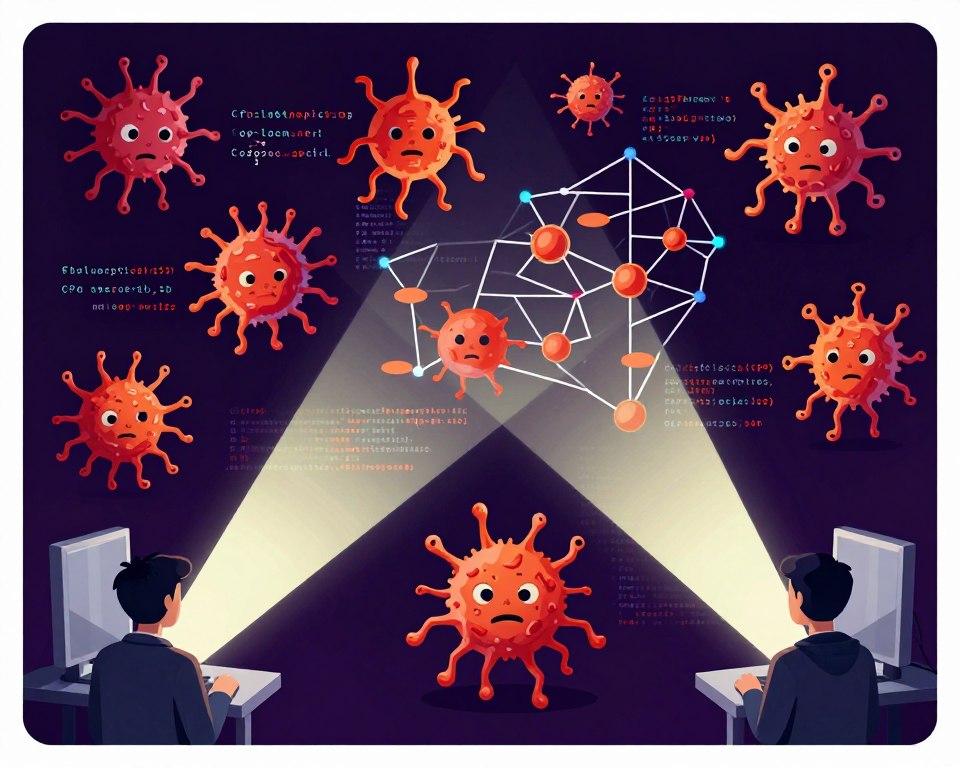
Machine learning algorithms enable malware to recognize when it operates in a sandbox environment. Security researchers typically analyze suspicious files in isolated virtual machines. AI-powered malware detects these analysis systems and remains dormant. It only activates its malicious payload when deployed on actual victim systems.
Polymorphic malware uses AI to generate endless variations of itself. Each infection creates unique code that performs the same malicious functions. Signature-based antivirus systems cannot maintain databases of every variant. The malware evolves faster than security vendors can create detection signatures.
Adversarial machine learning attacks target AI-based security systems directly. Attackers train their malware against common security algorithms. The malicious code learns to generate patterns that security AI classifies as benign. This exploitation of machine learning blind spots creates threats that slip past even advanced behavioral detection.
Sophisticated Social Engineering
Social engineering exploits human psychology rather than technical vulnerabilities. Artificial intelligence dramatically enhances these manipulation techniques. Attackers use AI to analyze vast amounts data about targets and craft perfectly tailored deception strategies.
Chatbots powered by advanced language models conduct reconnaissance conversations. These AI agents engage targets on social media or professional networking sites. They build rapport over time while extracting valuable information about security procedures, organizational structure, and personal details.
Defender Advantages
- Larger security budgets and resources
- Collaboration through threat intelligence sharing
- Regulatory compliance requirements driving investment
- Access to security research community
- Defensive advantage of protecting known systems
Attacker Advantages
- Only need to find one successful attack vector
- Freedom to operate without regulatory constraints
- Can test attacks without legal consequences
- Faster adoption of emerging AI technologies
- Lower cost barrier for AI tool access
Sentiment analysis helps attackers identify the optimal timing for social engineering attacks. AI systems monitor target communications to detect stress, job dissatisfaction, or personal problems. Attackers strike when individuals are most psychologically vulnerable and likely to make security mistakes.
Automated social media profiling creates detailed target dossiers instantly. Machine learning algorithms aggregate information from dozens of platforms. They identify relationships, interests, schedules, and potential leverage points. Attackers receive comprehensive intelligence that would take human researchers weeks to compile.
Adversarial AI Attacks on Security Systems
Security systems increasingly rely on machine learning for threat detection and response. This dependence creates a new attack surface. Adversarial AI techniques deliberately manipulate input data to fool these intelligent security tools.
Data poisoning attacks corrupt the training data that security algorithms learn from. Attackers inject carefully crafted malicious samples into threat intelligence feeds. When security systems train on this poisoned data, they learn to classify actual threats as benign traffic. The compromised AI becomes blind to specific attack types.
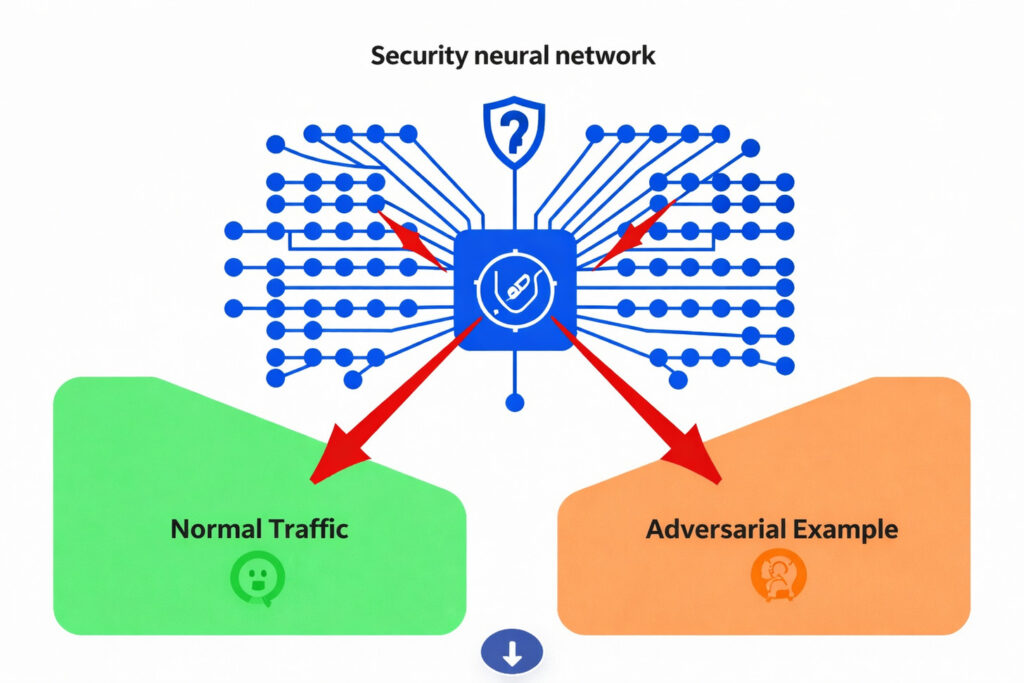
Model inversion attacks extract sensitive information from AI security systems. Attackers query the system repeatedly with crafted inputs. By analyzing the responses, they reverse-engineer details about the training data and detection logic. This intelligence reveals security blind spots and protected data patterns.
Evasion attacks modify malicious payloads to exploit AI model weaknesses. Attackers add small perturbations to malware or network traffic that remain functionally identical but change how the AI classifier processes them. These subtle modifications cause security systems to misclassify threats as legitimate activity.
The adversarial AI arms race accelerates continuously. Security vendors enhance their models with adversarial training. Attackers develop new techniques to bypass these improvements. Each advance by one side drives innovation by the other. Organizations find themselves caught in an escalating cycle of defensive and offensive AI development.
Challenges and Ethical Considerations
Implementing AI in cybersecurity introduces complex challenges that extend beyond technical capabilities. Organizations must navigate significant obstacles related to data privacy, algorithmic transparency, resource requirements, and ethical implications. These concerns shape how artificial intelligence can be responsibly deployed for network security.

Security professionals face difficult decisions about balancing protection effectiveness with individual rights and organizational values. Understanding these challenges helps organizations implement AI security solutions that deliver benefits while minimizing negative consequences.
Data Privacy and Training Bias
Artificial intelligence systems require massive datasets for effective training. Security AI must analyze network traffic, user behavior, and system logs continuously. This comprehensive monitoring creates significant privacy concerns for employees and customers.
Organizations collect and store enormous amounts data about individual activities. Machine learning algorithms process communications, file access patterns, and browsing histories. Even when anonymized, this information can potentially be re-identified or misused. Privacy regulations like GDPR create strict requirements for how security systems handle personal data.
Training data bias introduces systematic discrimination into AI security tools. If historical security data overrepresents certain user groups as threats, the AI learns these biased patterns. The system may then flag legitimate activities from those demographics as suspicious more frequently. This creates unfair security experiences and potential legal liability.
Important Consideration: AI security systems trained primarily on data from Western organizations may perform poorly when deployed in different cultural or linguistic contexts. The algorithms fail to recognize normal behavior patterns that differ from their training environment, generating excessive false positives.
Data quality directly determines AI security effectiveness. Many organizations struggle with incomplete or inconsistent security logs. Missing data creates gaps in the AI’s understanding. Inconsistent formats prevent algorithms from recognizing patterns across different systems. Poor data quality undermines even the most sophisticated machine learning models.
Synthetic data generation offers potential solutions but introduces new risks. Organizations can create artificial training datasets that preserve privacy while providing learning examples. However, synthetic data may not capture all real-world complexity. AI trained exclusively on generated data might miss actual threats that don’t match the synthetic patterns.
The Black Box Problem
Many powerful AI security tools operate as “black boxes” that provide limited explanation for their decisions. Deep learning neural networks process information through countless layers of mathematical transformations. Even the engineers who built these systems cannot always explain why a particular input produces a specific output.
Traditional Security Rules
Security teams can examine and understand rule-based systems completely. Each detection follows explicit logic that analysts can trace and verify. When a firewall blocks traffic, the specific rule that triggered provides clear explanation.
- Transparent decision logic
- Auditable rule chains
- Predictable behavior
- Easy troubleshooting
AI Security Decisions
Machine learning models generate threat classifications based on statistical patterns learned during training. The relationship between input features and output decisions involves complex mathematical functions that resist simple explanation.
- Opaque decision processes
- Statistical probability outputs
- Difficult to audit
- Complex troubleshooting
This lack of transparency creates challenges for security operations. When an AI system blocks a transaction or flags an employee as a threat, security professionals need to understand why. Without clear explanations, they cannot determine whether the system detected a genuine threat or made an error.
Regulatory compliance often requires explainable decisions. Financial institutions must justify why they blocked specific transactions. Healthcare organizations need documented reasons for security actions that affect patient data access. Black box AI systems struggle to meet these accountability requirements.
Explainable AI research aims to address these transparency concerns. New techniques like LIME and SHAP help interpret machine learning decisions. These tools identify which input features most influenced a particular classification. However, explanations remain approximations rather than complete descriptions of the AI’s decision process.
Cost and Expertise Requirements
Implementing effective AI cybersecurity solutions demands substantial financial investment and specialized human expertise. These resource requirements create barriers, particularly for smaller organizations with limited security budgets.
| Resource Category | Initial Investment | Ongoing Costs | Expertise Required |
| AI Security Platform | $100K – $500K | $50K – $200K annually | Medium to High |
| Infrastructure Upgrades | $50K – $300K | $20K – $100K annually | Medium |
| Data Storage & Processing | $30K – $150K | $40K – $200K annually | Medium |
| Specialized Personnel | $150K – $400K annually | $200K – $500K annually | Very High |
| Training & Development | $20K – $100K | $30K – $150K annually | High |
Computing infrastructure represents a major expense component. AI security systems require significant processing power to analyze network traffic in real time. Organizations must invest in high-performance servers or cloud computing resources. Graphics processing units accelerate machine learning workloads but add substantial hardware costs.
The cybersecurity talent shortage intensifies for AI-specialized roles. Organizations compete for professionals who understand both cybersecurity principles and machine learning techniques. These experts command premium salaries. Many companies cannot afford dedicated AI security teams.
Training existing security staff requires time and investment. Traditional security professionals must learn data science concepts, programming skills, and machine learning fundamentals. This education process takes months or years. Meanwhile, organizations struggle with capability gaps during the transition period.
Managed security service providers offer alternatives for organizations lacking internal resources. These companies deliver AI-powered security monitoring and response as a service. However, outsourcing introduces different challenges around data sharing, vendor dependency, and customization limitations.
The AI Arms Race
Cybersecurity has entered an escalating competition where both defenders and attackers continuously enhance their AI capabilities. Each advancement by security tools prompts adversaries to develop counter-techniques. This cycle creates pressure for constant innovation and investment.

Organizations face pressure to adopt AI security tools simply to maintain parity with sophisticated attackers. Those who rely solely on traditional defenses find themselves increasingly vulnerable. However, rushing to implement AI without proper planning creates its own risks.
The pace of AI advancement makes long-term security planning difficult. Technologies that seem cutting-edge today may become obsolete within months. Organizations struggle to justify major investments in tools that might soon be surpassed. This rapid evolution favors attackers who can adopt new techniques quickly without bureaucratic approval processes.
Smaller organizations risk being left behind in this technological competition. They cannot afford the same AI security investments as large enterprises. Attackers may increasingly target these less-protected organizations as easier victims. This dynamic could widen the security gap between well-resourced and budget-constrained entities.
International cooperation becomes essential but faces obstacles. Cyber threats cross borders instantly, yet security regulations and data sharing laws vary significantly between countries. Different nations pursue AI development with varying levels of ethical oversight. These inconsistencies complicate global efforts to establish responsible AI security norms.
The Future of AI in Cybersecurity
Artificial intelligence continues evolving rapidly, with emerging capabilities that will reshape cybersecurity fundamentally. Organizations must understand these coming developments to prepare their security strategies. The next generation of AI security tools promises both remarkable opportunities and new challenges.

Forward-thinking security professionals track these trends to gain competitive advantages. Early adoption of emerging AI capabilities can provide significant protection benefits. Understanding future directions also helps organizations avoid investing in approaches that may soon become outdated.
Autonomous Security Systems
Current AI security tools require significant human oversight and intervention. The next evolution moves toward truly autonomous systems that detect, analyze, and respond to threats with minimal human involvement. These platforms will make decisions independently while keeping security professionals informed.
Self-learning security architectures will adapt to new threats without explicit programming. Machine learning models will continuously update their understanding based on emerging attack patterns. When novel threats appear, the system will automatically develop new detection and response capabilities. Human analysts will focus on strategic decisions rather than operational response tasks.

Autonomous Threat Hunting
AI systems will proactively search for hidden threats across network infrastructure without human direction. These tools will hypothesize potential attack scenarios and investigate automatically, identifying compromises that evaded initial detection.

Self-Healing Infrastructure
Security systems will automatically remediate vulnerabilities and recover from attacks. When breaches occur, AI will isolate affected systems, remove malicious code, restore compromised data, and strengthen defenses against similar future attacks.

Predictive Defense
Future AI will forecast attack likelihood against specific assets and preemptively strengthen vulnerable points. Predictive models will analyze global threat intelligence to anticipate which techniques attackers will likely employ next against your organization.
Orchestration between multiple AI security tools will become seamless. Different specialized AI systems will communicate and coordinate their actions automatically. Endpoint protection,network monitoring, and identity management tools will share intelligence and align their responses. This integration creates comprehensive defense that adapts faster than any single tool could achieve.
Regulatory frameworks will need to address autonomous AI decision-making authority. Legal questions arise when machines make security choices that affect business operations or individual rights. Organizations must establish clear governance policies defining when autonomous systems can act independently versus requiring human approval.
Generative AI for Security Operations
Generative artificial intelligence models like large language models will transform how security professionals work. These tools will assist with report writing, code analysis, threat intelligence synthesis, and security policy development. The technology amplifies human expertise rather than replacing it.
Automated threat intelligence reporting will save security teams countless hours. AI will monitor threat feeds from hundreds of sources continuously. When significant new threats emerge, the system will generate comprehensive briefings explaining the attack technique, affected systems, and recommended countermeasures. Security professionals receive actionable intelligence without manual research.
Security policy generation will become more sophisticated and tailored. Organizations will describe their security requirements in natural language. Generative AI will produce complete, technically precise security policies that address those needs. The system will keep policies updated automatically as regulations and best practices evolve.
However, generative AI also creates new security risks. Attackers will use these same tools to create sophisticated malware, generate convincing phishing content, and discover vulnerabilities faster. The defensive applications must stay ahead of malicious uses. This challenge reinforces the ongoing arms race dynamic.
Quantum Computing and AI Security
Quantum computers represent both a massive threat to current encryption methods and an opportunity for enhanced AI security capabilities. Organizations must prepare for this technological transition that will fundamentally alter the cybersecurity landscape.
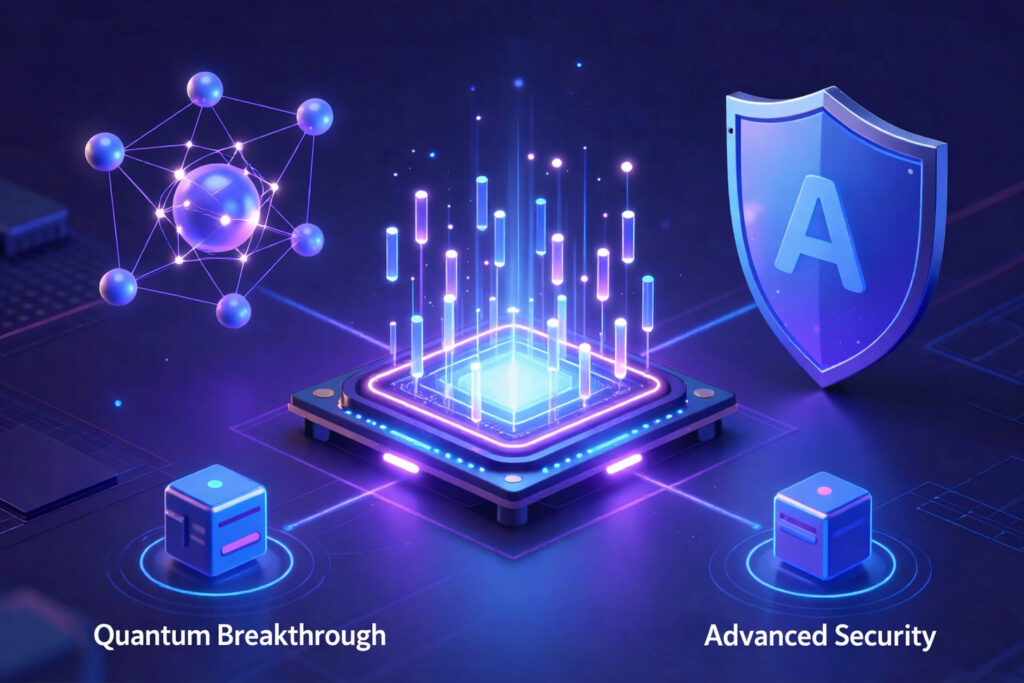
Quantum computers will eventually break many encryption algorithms that protect data today. This “quantum threat” motivates development of quantum-resistant cryptography. Organizations must begin transitioning to these new encryption methods before quantum computers become powerful enough to compromise current protections.
Conversely, quantum computing will dramatically accelerate certain AI security applications. Machine learning algorithms that currently take hours or days to train could complete in minutes. Pattern recognition across vast amounts data will become nearly instantaneous. Security systems will process threat intelligence at unprecedented scales.
Quantum machine learning algorithms will detect subtle attack patterns invisible to classical computing approaches. These advanced models will identify correlations in network traffic that reveal sophisticated threats. The enhanced processing power enables security AI to analyze entire organizational infrastructure simultaneously rather than sampling subsets of data.
However, quantum-enhanced AI also benefits attackers. Malicious actors will use quantum computing to break encryption, optimize attack strategies, and develop undetectable malware. The technology creates another dimension to the security arms race that favors whoever achieves quantum advantage first.
AI Governance and Explainable AI
As AI systems assume greater security responsibilities, organizations need robust governance frameworks. These policies define acceptable uses, accountability structures, and oversight mechanisms for artificial intelligence in cybersecurity contexts.
Governance Framework Components
- Clear authority boundaries for autonomous AI decisions
- Human oversight requirements for critical actions
- Regular bias and fairness audits
- Incident response procedures when AI fails
- Vendor accountability for third-party AI tools
- Documentation requirements for AI decision logic
- Periodic review and update processes
Explainable AI Priorities
- Transparency in threat classification reasoning
- Confidence scores for AI security decisions
- Feature importance visualization for detections
- Audit trails for automated response actions
- Plain language explanations for non-technical stakeholders
- Debugging capabilities for false positives
- Performance metrics and accuracy reporting
Explainable AI research focuses on making machine learning decisions interpretable. New techniques generate human-understandable explanations for why an AI system classified something as a threat. These explanations help security professionals trust and validate AI recommendations.
Regulatory pressure will drive greater AI transparency requirements. Government agencies worldwide are developing rules about algorithmic accountability. Security organizations must demonstrate that their AI systems make fair, accurate, and legally compliant decisions. This compliance burden favors explainable AI approaches over black box models.
Industry standards for responsible AI security deployment will mature. Professional organizations will publish best practices covering testing, validation, monitoring, and governance. These standards will help organizations implement AI security tools safely while maintaining ethical principles and regulatory compliance.
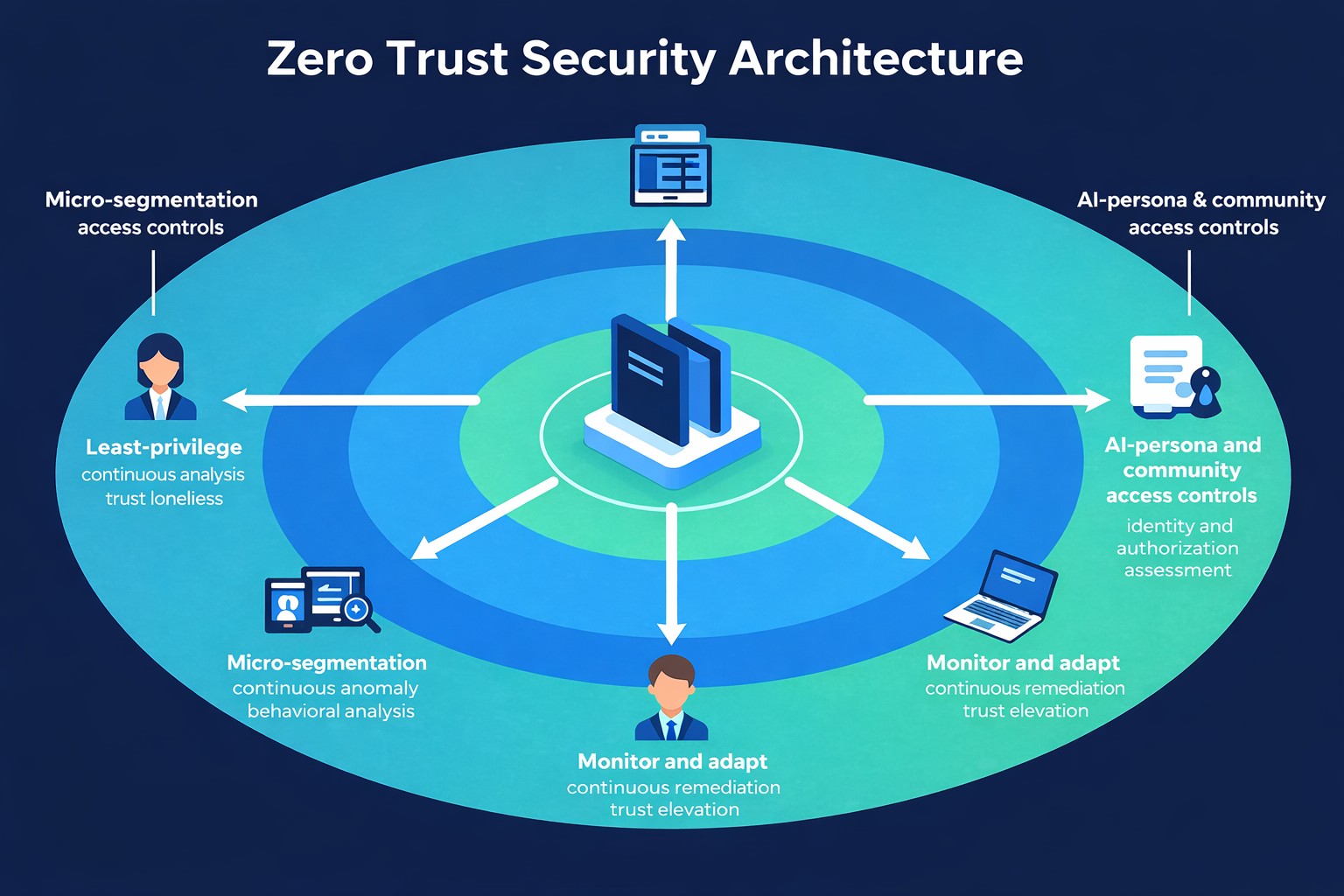
Integration with Zero Trust Architecture
Zero trust security models assume that threats exist both inside and outside network perimeters. This approach requires continuous verification of all users and devices. Artificial intelligence becomes essential for making zero trust practical at scale.
AI-powered identity verification will authenticate users continuously rather than just at login. Machine learning algorithms analyze ongoing behavior patterns to confirm that the legitimate user still controls each session. Any anomaly triggers re-authentication or access restrictions. This dynamic verification adapts to evolving threats real-time.
Conclusion: Navigating the AI-Powered Security Future

Artificial intelligence fundamentally transforms cybersecurity in ways both promising and concerning. Machine learning algorithms now detect threats that would overwhelm human analysts. Automated systems respond to attacks in milliseconds. Predictive models anticipate future vulnerabilities before exploitation occurs.
Yet this technological revolution creates new challenges alongside its benefits. Attackers wield the same AI capabilities to develop more sophisticated cyber threats. Organizations face difficult choices about data privacy, algorithmic transparency, and resource allocation. The security landscape becomes increasingly complex as both defenders and adversaries enhance their artificial intelligence tools.
Success in this AI-powered environment requires balanced approaches. Technology alone cannot solve cybersecurity challenges. Organizations need strategies that combine advanced AI security tools with skilled human expertise. Security professionals must understand both the capabilities and limitations of artificial intelligence.
The most effective security postures integrate multiple defense layers. AI-powered threat detection works alongside traditional security controls. Automated response systems operate under human oversight and governance. Continuous learning improves both machine algorithms and human understanding.
Key Takeaway: Organizations that successfully implement AI in cybersecurity share common characteristics: they invest in both technology and people, maintain realistic expectations about AI capabilities, prioritize explainable and ethical AI systems, and continuously adapt their strategies as threats evolve.
Looking forward, artificial intelligence will become increasingly central to cybersecurity operations. Quantum computing, autonomous security systems, and generative AI will reshape defensive capabilities. Organizations must prepare for these developments while addressing current implementation challenges.
The human element remains irreplaceable despite technological advances. Security professionals provide strategic thinking, ethical judgment, and creative problem-solving that AI cannot replicate. The future belongs to organizations that effectively combine human intelligence with artificial intelligence.
Cyber threats will continue evolving in sophistication and scale. AI provides essential tools for managing this challenge, but not a complete solution. Organizations must commit to ongoing investment in security technology, personnel development, and strategic planning.
The journey toward AI-enhanced cybersecurity requires careful navigation. In this dynamic ecosystem, partnering with experienced cybersecurity providers becomes crucial. Companies like Atrity Info Solutions play a vital role in helping organizations navigate these complexities. By delivering advanced, AI-driven security solutions tailored to business needs, Atrity Info Solutions enables enterprises to strengthen their defenses, reduce risks, and stay ahead of emerging threats. Organizations should start with clear objectives, build strong foundations, and scale implementations gradually. Success comes from treating AI as a powerful tool that augments rather than replaces human security expertise.
