
 Read More
The Evolving Cybersecurity Landscape in 2026
The threat environment has undergone dramatic transformation over recent years. Attack surfaces have expanded exponentially as organizations embrace cloud computing, remote work, and Internet of Things devices. Traditional security perimeters have essentially disappeared.
Digital transformation initiatives accelerate business operations while simultaneously creating new vulnerabilities. Every connected device represents a potential entry point for malicious actors. Security teams struggle to maintain visibility across increasingly complex environments.
Artificial intelligence and automation have become double-edged swords in the security arena. While security teams leverage these technologies for threat detection, attackers exploit them to launch more sophisticated campaigns. The automation of attacks means organizations face constant bombardment from automated tools scanning for weaknesses.
Regulatory requirements continue tightening globally. Governments worldwide implement stricter data protection standards. Organizations must navigate complex compliance frameworks while maintaining operational efficiency. Failure to meet these standards results in severe financial penalties and reputational damage.
Traditional Security Challenges
- Perimeter-based defense models
- Manual threat detection processes
- Limited visibility into networks
- Reactive security approaches
Modern Security Requirements
- Zero-trust architecture implementation
- Automated threat response systems
- Comprehensive environment monitoring
- Proactive risk management strategies
- Continuous compliance validation
- Identity-centric security models
The convergence of physical and digital systems creates unprecedented risk scenarios. Critical infrastructure relies heavily on interconnected technology platforms. A single vulnerability in one system can cascade across entire operations, disrupting essential services and endangering public safety.
Why Cybersecurity is Critical in 2026
Protection of Sensitive Data and Information
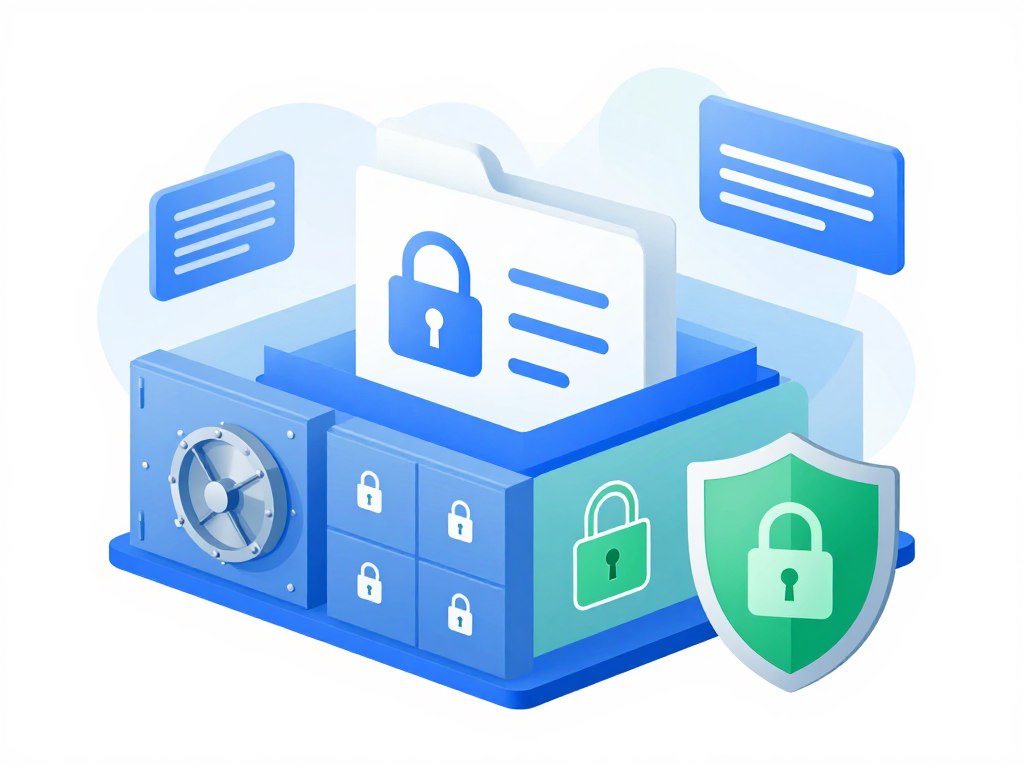
Data represents the lifeblood of modern organizations. Customer information, intellectual property, and financial records require constant protection from unauthorized access. Breaches expose sensitive data to competitors and criminals alike.
Regulatory frameworks mandate strict data governance practices. Organizations handling personal information must implement comprehensive protection mechanisms. The cost of non-compliance includes substantial fines and legal consequences that can cripple businesses.
Data loss incidents damage customer relationships permanently. Once trust erodes, rebuilding it becomes nearly impossible. Customers expect organizations to safeguard their information with military-grade security.
Business Continuity and Operational Resilience
Cyberattacks can halt operations instantly. Ransomware incidents lock organizations out of critical systems for days or weeks. During this downtime, revenue streams dry up while recovery costs mount rapidly.
Supply chain disruptions ripple through entire business ecosystems. A incident at one vendor can impact dozens of downstream organizations. Building resilience requires comprehensive risk management across all business relationships.
Financial Impact
Average breach costs exceed $4.5 million globally. Recovery expenses include incident response, legal fees, regulatory fines, and system restoration. Lost business opportunities compound these direct costs significantly.
Reputational Damage
Public breaches destroy brand value instantly. News coverage amplifies customer concerns and erodes market confidence. Competitors exploit security failures to capture market share from vulnerable organizations.
Operational Disruption
System downtime paralyzes business operations. Employees cannot access necessary tools and information. Customer service deteriorates as systems remain offline during recovery efforts.
Compliance and Legal Requirements
Regulatory environments grow increasingly complex across jurisdictions. Organizations must comply with multiple overlapping standards simultaneously. Governance frameworks require documented security controls and regular audits.
Industry-specific regulations impose additional requirements. Healthcare organizations face HIPAA mandates. Financial institutions navigate strict banking regulations. Failure to maintain compliance results in operational restrictions and substantial penalties.
Important Note: Indian organizations must comply with the Digital Personal Data Protection Act along with industry-specific regulations. Non-compliance carries penalties up to ₹250 crore for serious violations.
Competitive Advantage Through Security
Strong security postures create market differentiation. Customers increasingly evaluate vendors based on their security practices. Demonstrating robust protection capabilities wins contracts and builds customer loyalty.
Security certifications open doors to new business opportunities. Many enterprises require vendors to maintain specific compliance standards. Investment in security enables participation in lucrative market segments.
Emerging Cyber Threats and Attacks in 2026
The threat landscape constantly evolves as attackers develop new techniques. Understanding emerging attack vectors helps organizations prepare appropriate defenses. Staying informed about current threats is essential for effective risk management.
Quantum Computing Threats to Encryption
Quantum computing advances pose existential threats to current encryption standards. These powerful systems can break traditional cryptographic algorithms that protect sensitive information. Organizations must begin transitioning to quantum-resistant encryption methods immediately.
The timeline for quantum threats continues accelerating. Experts predict practical quantum computers capable of breaking current encryption within five to ten years. Attackers already harvest encrypted data for future decryption once quantum computing capabilities mature.
Post-quantum cryptography standards are emerging to address these threats. Organizations should inventory their cryptographic implementations and develop migration strategies. Early adoption of quantum-resistant algorithms provides protection against future threats.
AI-Powered Cyberattacks
Artificial intelligence enables attackers to automate and scale their operations exponentially. Machine learning algorithms identify vulnerabilities faster than human analysts. AI-generated phishing campaigns adapt in real-time to bypass security filters.
Deepfake technology creates convincing impersonations for social engineering attacks. Voice synthesis enables attackers to impersonate executives during phone calls. Video manipulation tools produce realistic fake content for sophisticated fraud schemes.
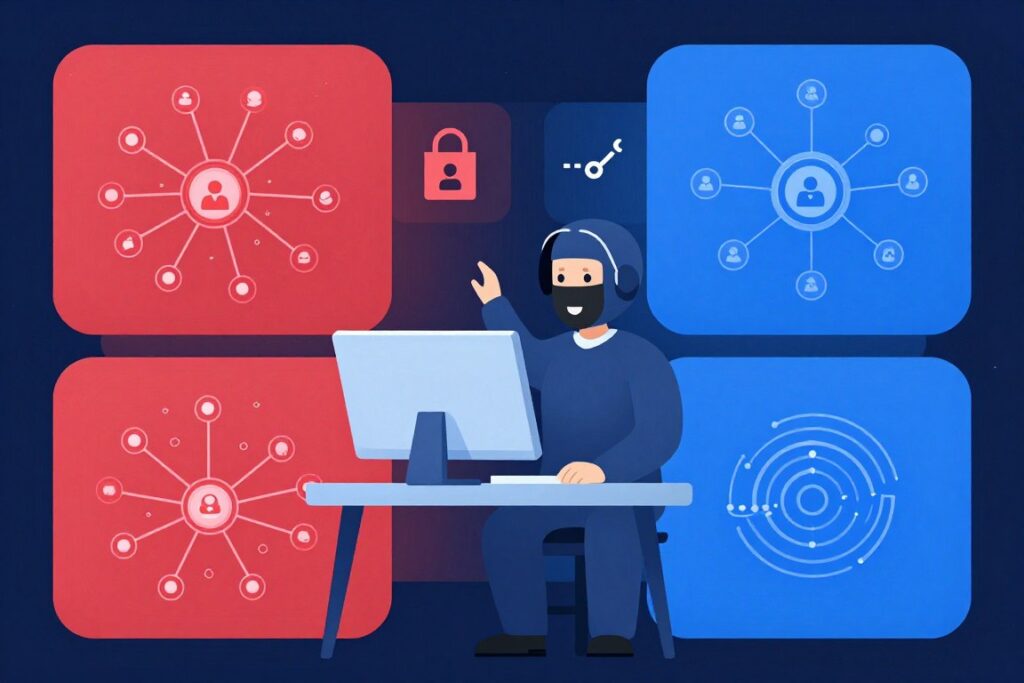
Automated attack platforms lower the barrier to entry for cybercriminals. Script kiddies access sophisticated tools previously available only to advanced threat actors. The democratization of attack technology increases overall risk exposure for all organizations.
Supply Chain and Third-Party Risks
Attack surfaces extend far beyond organizational boundaries. Vendors, partners, and service providers all represent potential security weaknesses. Attackers increasingly target less-secure partners as stepping stones to reach primary targets.
Software supply chain attacks compromise legitimate applications during development or distribution. Attackers inject malicious code into trusted software packages. Organizations unknowingly deploy compromised systems across their environments.
Cloud service dependencies create concentration risks. Many organizations rely on the same cloud platforms and services. A security incident at a major provider can impact thousands of downstream customers simultaneously.
Ransomware Evolution
Ransomware operations have matured into sophisticated criminal enterprises. Attackers employ double and triple extortion techniques. Beyond encrypting data, they threaten to publish stolen information and launch distributed denial-of-service attacks.
Ransomware-as-a-service platforms enable criminals to launch attacks without technical expertise. These platforms provide user-friendly interfaces for configuring and deploying ransomware campaigns. The industrialization of ransomware increases attack frequency across all sectors.
Internet of Things Vulnerabilities
IoT device proliferation creates massive attack surfaces. Many devices ship with weak default credentials and inadequate security controls. Manufacturers prioritize functionality over security during product development.
Connected devices in critical infrastructure represent attractive targets. Industrial control systems and building automation platforms often lack basic security features. Successful attacks can cause physical damage and endanger human safety.
Cybersecurity Trends and Technologies Shaping 2026
Zero Trust Architecture Implementation
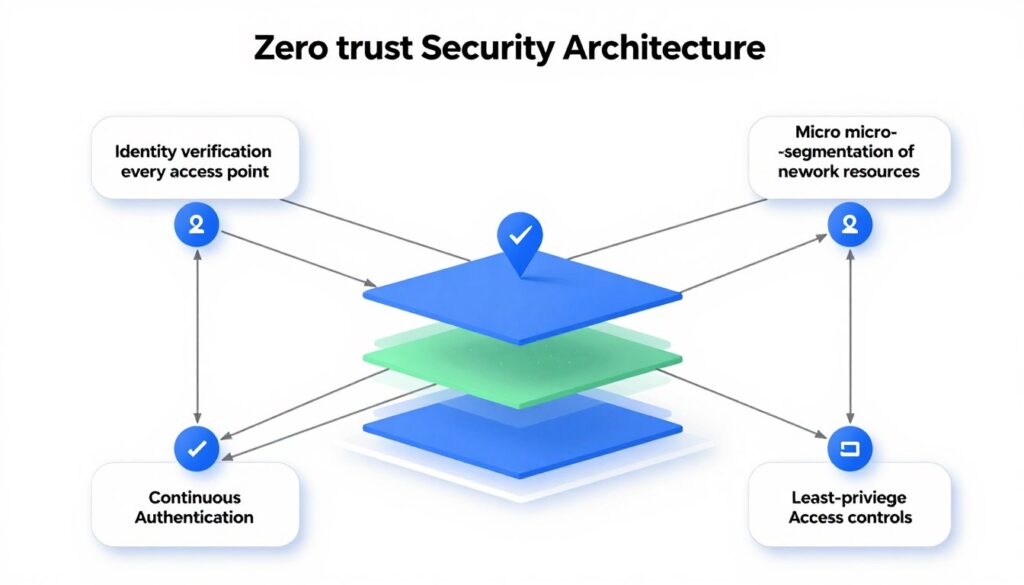
Zero trust models eliminate implicit trust from security frameworks. Every access request requires verification regardless of source location. Organizations assume breach and verify continuously rather than trusting internal network positions.
Identity becomes the new security perimeter in zero trust environments. Multi-factor authentication and continuous identity verification protect access to sensitive resources. Least-privilege access principles limit exposure when credentials become compromised.
Micro-segmentation divides networks into isolated zones with granular access controls. Lateral movement becomes extremely difficult for attackers who breach initial defenses. Each segment maintains independent security policies tailored to specific risk profiles.
Security Automation and Orchestration
Automation addresses the growing shortage of skilled security professionals. Security orchestration platforms integrate disparate tools into cohesive workflows. Automated response capabilities neutralize threats faster than manual processes allow.
Machine learning models detect anomalies and identify potential threats in real-time. These systems analyze massive datasets to recognize attack patterns. Automation enables security teams to focus on strategic initiatives rather than routine tasks.
Playbook-driven responses ensure consistent handling of common security incidents. Automated workflows execute predetermined response actions when specific conditions trigger. This consistency improves overall security operations efficiency and effectiveness.
Extended Detection and Response
Extended detection and response platforms provide comprehensive visibility across enterprise environments. These solutions correlate data from endpoints, networks, cloud platforms, and applications. Unified telemetry enables faster threat identification and response.
Behavioral analytics identify suspicious activities that signature-based tools miss. User and entity behavior analytics establish baseline patterns and flag deviations. This approach catches insider threats and advanced persistent threats that evade traditional defenses.
Traditional Security Tools
Legacy security solutions operate in isolation, creating visibility gaps. Point products generate alerts independently without context. Security teams struggle to correlate events across multiple platforms during incident investigations.
- Siloed security tools
- Manual log correlation
- Limited threat context
- Reactive alert response
Modern XDR Platforms
Extended detection and response solutions provide unified security visibility. Automated correlation connects related events across the entire environment. Integrated threat intelligence enriches alerts with actionable context.
- Unified security platform
- Automated threat correlation
- Comprehensive attack visibility
- Proactive threat hunting
- Integrated response workflows
Cloud-Native Security Solutions
Cloud environments require purpose-built security approaches. Traditional network security tools prove ineffective in dynamic cloud infrastructures. Cloud-native security platforms integrate directly with cloud provider APIs for real-time protection.
Container security addresses risks in microservices architectures. Image scanning identifies vulnerabilities before deployment. Runtime protection monitors container behavior and blocks malicious activities.
Cloud security posture management tools continuously assess configuration compliance. Automated remediation fixes misconfigurations before attackers exploit them. These platforms enforce security standards across multi-cloud environments consistently.
Privacy-Enhancing Technologies
Privacy regulations drive adoption of advanced data protection techniques. Encryption methods evolve to balance security requirements with operational needs. Homomorphic encryption enables computation on encrypted data without decryption.
Differential privacy protects individual data points while enabling useful analysis of aggregate datasets. Organizations can derive insights from sensitive data without exposing personal information. These techniques support compliance with strict privacy regulations.
Secure multi-party computation allows organizations to collaborate on sensitive data without sharing raw information. Financial institutions use these techniques for fraud detection across organizational boundaries. Privacy-preserving technologies enable cooperation while maintaining data sovereignty.
Best Practices for Individuals and Businesses
Effective cybersecurity requires layered defenses and consistent practices. Technology alone cannot provide adequate protection. Human factors remain critical components of comprehensive security programs.
Essential Security Hygiene for Everyone
Strong password management forms the foundation of digital security. Unique, complex passwords protect each account independently. Password managers generate and store credentials securely while simplifying daily access.
Multi-factor authentication adds critical protection layers beyond passwords. Biometric verification, hardware tokens, and authenticator apps prevent credential-based attacks. Organizations should mandate MFA for all accounts accessing sensitive systems.
Regular software updates close known vulnerabilities before attackers exploit them. Automated patching ensures systems receive critical security fixes promptly. Delayed updates create windows of opportunity for exploitation.
- Implement Strong Authentication: Use multi-factor authentication on all accounts. Combine something you know (password), something you have (token), and something you are (biometric).
- Maintain Current Software: Enable automatic updates for operating systems and applications. Patch management eliminates known vulnerabilities that attackers actively exploit.
- Practice Safe Browsing: Avoid suspicious websites and unsolicited links. Verify website authenticity before entering credentials or financial information.
- Secure Network Connections: Use virtual private networks on public Wi-Fi. Encrypt data in transit to prevent interception and eavesdropping.
- Regular Data Backups: Maintain offline backups of critical information. Test restoration procedures to ensure backup integrity and accessibility.
- Email Security Awareness: Scrutinize sender addresses and attachment sources. Report phishing attempts to security teams immediately.
Organizational Security Framework
Comprehensive security programs require executive commitment and adequate resources. Security governance establishes accountability and oversight structures. Board-level involvement ensures security receives appropriate strategic priority.
Risk management frameworks guide security investment decisions. Organizations identify and prioritize risks based on potential business impact. Resources flow toward protecting the most critical assets and operations.
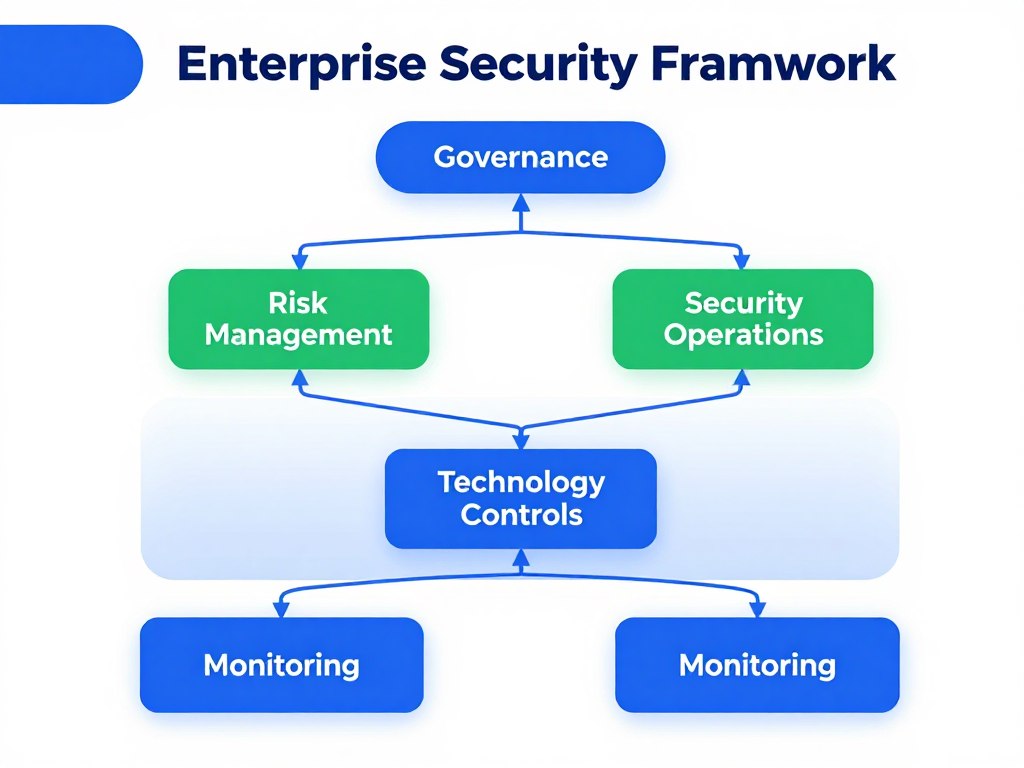
Security awareness training transforms employees into defensive assets. Regular education programs teach staff to recognize and report suspicious activities. Simulated phishing exercises reinforce training and identify areas needing additional focus.
Incident response planning ensures organizations can respond effectively when breaches occur. Documented procedures guide response teams through containment, investigation, and recovery phases. Regular tabletop exercises validate and refine response capabilities.
Third-Party Risk Management
Vendor assessment processes evaluate security practices before establishing relationships. Due diligence questionnaires and security audits verify vendor capabilities. Ongoing monitoring ensures vendors maintain acceptable security standards throughout the relationship.
Contractual requirements establish security expectations and responsibilities. Service level agreements should include security metrics and breach notification timelines. Clear contracts enable accountability when security incidents involve third parties.
Vendor Assessment
- Security questionnaire completion
- Certification verification
- Audit report review
- Reference checking
- On-site assessments for critical vendors
Contract Requirements
- Data protection obligations
- Breach notification procedures
- Audit rights and frequency
- Incident response coordination
- Termination and data return processes
Ongoing Monitoring
- Continuous risk assessment
- Performance metric tracking
- Regular security reviews
- Threat intelligence sharing
- Relationship governance meetings
Data Protection and Privacy Controls
Data classification schemes categorize information based on sensitivity and regulatory requirements. Different protection levels apply based on classification. Organizations implement appropriate controls for each data category.
Encryption protects data at rest and in transit from unauthorized access. Strong encryption algorithms and proper key management ensure confidentiality. Organizations should encrypt all sensitive data regardless of storage location.
Access controls limit data exposure based on business need. Role-based access ensures users only access information required for their responsibilities. Regular access reviews identify and remove unnecessary permissions.
Data loss prevention systems monitor and control information movement. These tools prevent accidental or intentional data exfiltration. Policy enforcement blocks unauthorized data transfers before sensitive information leaves organizational control.
Practical Tips for Improving Your Cybersecurity Posture
Improving security doesn’t require massive budgets or complex projects. Small, consistent improvements compound over time to significantly enhance protection. Organizations should prioritize quick wins while planning long-term improvements.
Start with Security Fundamentals
Asset inventory provides visibility into what requires protection. Organizations cannot secure assets they don’t know exist. Comprehensive inventories include hardware, software, data repositories, and cloud resources.
Vulnerability scanning identifies weaknesses in systems and applications. Regular scans detect missing patches, misconfigurations, and known vulnerabilities. Prioritize remediation based on severity and exploitability.
Network segmentation limits blast radius when breaches occur. Separate critical systems from general-use networks. Isolate development, testing, and production environments to prevent cross-contamination.
Implement Quick Security Wins
Immediate Actions (Week 1)
- Enable multi-factor authentication on all admin accounts
- Review and remove unnecessary user permissions
- Update all software to current versions
- Configure automatic security updates
- Enable logging on critical systems
Short-Term Improvements (Month 1)
- Deploy endpoint protection on all devices
- Implement network segmentation basics
- Conduct security awareness training
- Establish backup and recovery procedures
- Create incident response contact list
- Review and update access controls
- Document critical systems and dependencies
Building Security Culture
Security awareness must permeate organizational culture. Leadership sets the tone through visible commitment and resource allocation. Security should feature in regular communications from executives.
Gamification makes security training engaging and memorable. Competitions and rewards encourage participation and knowledge retention. Recognition programs celebrate employees who demonstrate security best practices.
Open reporting channels enable employees to flag concerns without fear. Anonymous reporting options encourage participation. Timely feedback on reports demonstrates organizational responsiveness.
Measuring Security Effectiveness
Metrics quantify security program performance and guide improvement efforts. Key performance indicators should align with business objectives. Regular measurement enables data-driven decision making.
| Security Metric | Measurement Method | Target Range | Review Frequency |
| Mean Time to Detect | Average hours from breach to detection | Less than 24 hours | Monthly |
| Mean Time to Respond | Average hours from detection to containment | Less than 4 hours | Monthly |
| Patch Compliance Rate | Percentage of systems with current patches | Above 95% | Weekly |
| Phishing Click Rate | Percentage clicking simulated phishing links | Below 5% | Quarterly |
| Security Training Completion | Percentage of staff completing annual training | 100% | Quarterly |
| Critical Vulnerability Remediation | Days to fix critical vulnerabilities | Less than 7 days | Weekly |
Continuous Improvement Processes
Security programs require constant evolution to address emerging threats. Regular assessments identify gaps and improvement opportunities. Lessons learned from incidents inform future enhancements.
Threat modeling exercises anticipate potential attack scenarios. Teams identify critical assets and likely attack paths. Proactive identification enables preventive control implementation.
Tabletop exercises test incident response capabilities in realistic scenarios. These simulations reveal procedural gaps and training needs. Regular exercises ensure teams can execute effectively under pressure.
External assessments provide independent validation of security postures. Penetration testing identifies exploitable vulnerabilities. Third-party audits verify compliance with standards and frameworks.
Staying Vigilant and Proactive in 2026
The Importance of Cybersecurity in 2026 cannot be overstated. Digital threats evolve constantly, requiring organizations to adapt continuously. Complacency creates vulnerabilities that attackers eagerly exploit.
Effective cybersecurity at Atrity Info Solutions is built on the right balance between advanced technology and skilled people. While security tools provide critical protection, informed human decisions remain the foundation of strong defense. We believe organizations must strengthen both their technical controls and their security-conscious culture to stay resilient against evolving threats.
At Atrity Info Solutions, cybersecurity is not treated as a one-time implementation but as a continuous commitment. Cyber threats evolve every day, and security strategies must evolve with them. Through ongoing monitoring, improvement, and adaptation, we help businesses stay protected in an ever-changing digital landscape.
Begin your security transformation with Atrity Info Solutions today. Even small proactive measures can prevent major security incidents in the future. With the right guidance, consistent effort, and strategic investment, every organization can significantly improve its security posture.
The future belongs to organizations that make cybersecurity a core part of business success. Atrity Info Solutions empowers businesses to innovate confidently by creating secure environments for digital transformation. Invest in cybersecurity today with Atrity Info Solutions and secure tomorrow’s opportunities.
