
 Read More
The supplied ranking-page entries include URLs but no readable HTML body or CTA markup. Therefore, the audit below uses each page’s stated topic, publisher type, and likely search-intent path without claiming unseen button text. EisnerAmper appears positioned around advisory trust and service consideration. Fortra is suited to a security-operations audience and can move readers toward a guide, assessment, or solution conversation. H2K Infosys appears education-led, with a colder audience seeking practical learning and possible training services. Across this niche, the strongest CTA path is not an immediate hard sell. Readers usually arrive with an information need and may not yet know which security service they need. A useful article should first explain risk, then offer a practical self-assessment, checklist, or expert review. A secondary CTA can support readers who want training or managed protection.
B2B organizations in India, including small businesses, mid-sized companies, IT teams, compliance leads, owners, and senior managers. Most visitors are cold or warm prospects. Their main pain points are unclear priorities, limited budgets, human error, outdated systems, and fear of regulatory or business damage. Product familiarity is mixed. The main objection is that security services may seem expensive or difficult to implement. Download, application/request, booking, and registration for a security assessment. Service, online service, and information product. Separate CTA blocks, short in-text prompts, and an application form for qualified leads. Use a soft CTA after the opening risk framework, a practical CTA after the prevention sections, and a stronger assessment CTA near the conclusion. Native presentation with a clear, professional, and low-pressure tone. Link/button and form.
- Lead with education because the keyword shows informational intent.
- Place a checklist or risk self-assessment after readers understand the main mistakes.
- Use benefit-led button copy such as “Get the security checklist” instead of generic “Click here.”
- Match the offer to the buyer stage: a download for cold visitors, a review request for warm visitors, and a consultation for high-intent visitors.
- Use separate blocks with one clear action. Avoid competing offers in the same block.
- Address Indian business concerns with practical references to data protection, vendors, remote work, and limited security teams.
- Make the CTA useful even when a reader is not ready to buy. This builds trust and improves qualified conversion.
Top Cybersecurity Mistakes Organizations Should Avoid | Guide Top Cybersecurity Mistakes Organizations Should Avoid, with practical steps for safer systems, stronger training, access control, backups, and compliance.
What the Ranking Pages Reveal About Effective CTAs
The three supplied results serve different stages of the B2B journey. EisnerAmper’s advisory position supports a trust-first path. Its likely conversion goal is an inquiry, consultation, or service discussion. That type of CTA works best after the article has shown business impact and decision risks.
Fortra’s resource-led position fits a solution-aware reader. A guide, product resource, or assessment can capture a lead before a sales conversation. This is useful for readers who know they have a problem but still need proof, structure, or technical direction.
H2K Infosys presents a more educational angle. Its audience may include learners, career changers, and businesses seeking training. A registration or course-related action is more natural than a direct enterprise security sale.
How to correct the mistake
- Require unique passwords for every company service.
- Enable multi-factor authentication for email, cloud tools, finance, and administrator accounts.
- Use phishing-resistant authentication where practical.
- Remove shared administrator passwords and review them often.
- Block known breached passwords and test account recovery procedures.
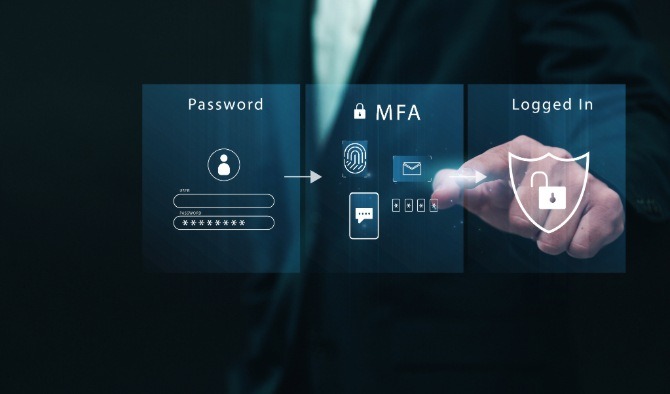
Multi-factor authentication does not remove every risk, but it makes stolen passwords less useful. Make sure MFA covers remote access and high-value systems first.
2. Treating Employee Training as a One-Time Event
Employees are part of the company’s security control. They are also frequent targets for phishing, fake invoices, malicious links, and social engineering. A single annual slide deck rarely changes daily behavior.
Effective cybersecurity training is short, repeated, and linked to real work. Show employees how to report suspicious emails, verify payment requests, protect devices, and handle sensitive data. Training should be respectful. Blaming people can cause them to hide mistakes.
Build a security-aware culture
- Provide onboarding training before access is granted.
- Repeat brief lessons during the year.
- Use realistic examples from email, messaging, and phone scams.
- Give employees a simple reporting channel.
- Measure reporting speed and completion, not only quiz scores.

3. Delaying Software Updates and Security Patches
Old software often contains weaknesses that attackers already understand. Delayed updates leave operating systems, browsers, applications, routers, and security tools exposed. This mistake becomes more dangerous when no one knows which software the company owns.
Create an asset list with system owners. Rank updates by severity, exposure, and business importance. Internet-facing systems deserve quick attention. Test important updates in a safe environment, but do not let testing become an excuse for indefinite delay.
Practical patching controls
- Maintain an accurate inventory of software and devices.
- Turn on automatic updates for supported applications.
- Set deadlines for critical and high-risk patches.
- Track exceptions with an owner and expiry date.
- Replace software that no longer receives security updates.

4. Having Backups That Cannot Restore the Business
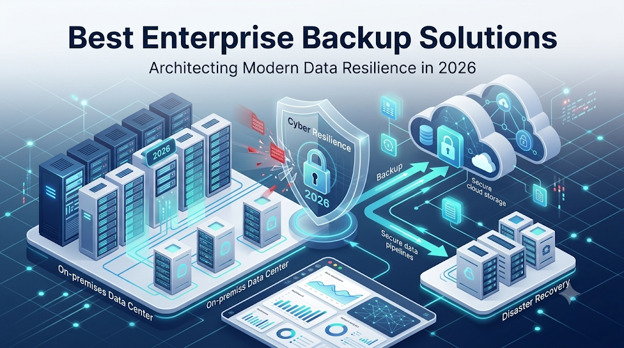
A backup is useful only when it can be recovered. Some organizations discover too late that backups were incomplete, connected to the same network, or never tested. Ransomware can encrypt both production data and accessible backup files.
Protect important data with separate backup copies. Keep at least one copy isolated or offline when possible. Limit who can delete or alter backups. Test recovery at set intervals and record how long key systems take to return.
What a reliable backup plan includes
- Clear recovery priorities for essential systems.
- Separate backup credentials and strong authentication.
- Versioned backups that resist unwanted changes.
- Documented recovery steps and responsible owners.
- Regular restore tests using real business data.
5. Giving Excessive Access and Weak Network Protection
People and systems should receive only the access they need. Excessive permissions allow one stolen account to reach more assets than necessary. Old accounts, contractor access, and unused administrator rights increase the attack surface.
Network protection also matters. Basic antivirus software helps identify common malicious files, but it is not a complete security program. Companies need secure configuration, endpoint protection, firewall rules, device controls, and network visibility.
Reduce access and strengthen networks
- Apply least privilege to users, applications, and service accounts.
- Review access when employees change roles or leave.
- Separate guest, office, server, and sensitive networks.
- Secure remote access with MFA and approved devices.
- Keep antivirus software updated and centrally managed.
- Disable unused ports, services, and accounts.

6. Neglecting Third-Party and Supply-Chain Risk
Vendors may process customer information, connect to internal systems, or support critical operations. Their security failure can become your company’s incident. Small businesses are often targeted through trusted suppliers because their controls may be weaker.
Vendor checks should continue after the contract is signed. Ask what data the provider stores, who can access it, how incidents are reported, and how access ends. Contract terms should cover security duties, breach notice, data deletion, and subcontractors.
Use a risk-based vendor process
- List vendors that handle sensitive data or system access.
- Classify providers by business and security impact.
- Review security evidence before onboarding.
- Limit integrations and vendor permissions.
- Reassess important providers at least once a year.
7. Waiting for an Incident Before Planning a Response
During a cyber attack, confusion increases damage. Teams may not know who should disconnect a device, contact a provider, preserve evidence, notify leadership, or speak with customers. An incident response plan turns urgent decisions into prepared actions.
The plan should cover ransomware, phishing, lost devices, insider misuse, cloud compromise, and data exposure. Include internal leaders, IT staff, legal advisers, communications teams, insurers, and external security professionals where needed.
Test the plan, not just the document
- Define incident levels and escalation contacts.
- List critical systems, data owners, and service providers.
- Prepare secure communication methods outside the affected network.
- Run tabletop exercises with decision-makers.
- Record lessons and update the plan after each exercise.

8. Failing to Monitor Systems and Investigate Warning Signs
Security tools create signals, but signals do not help if nobody reviews them. Unusual logins, repeated failed passwords, new administrator accounts, or large data transfers may indicate an attack. A long delay lets hackers move through systems and increase harm.
Organizations should collect useful logs from identity systems, endpoints, cloud services, firewalls, and important applications. Set alerts for high-risk events. Small companies can use a managed security service when they do not have security professionals available at all hours.
Make monitoring useful
- Decide which events require immediate review.
- Keep system clocks aligned for reliable timelines.
- Protect logs from deletion or alteration.
- Set an owner for each alert type.
- Review trends, not only individual warnings.

9. Treating Compliance and Sensitive Data as Separate Issues
Compliance is not a substitute for security, but it gives organizations a useful baseline. Businesses may face duties under contracts, industry rules, and data-protection requirements. Ignoring these duties can lead to penalties, lost trust, and expensive corrective work.
Start by identifying what sensitive data the company collects and why. Map where it moves, who can access it, and how long it is kept. Use suitable protection, clear retention rules, documented reviews, and a process for handling requests or incidents.
Turn requirements into daily practices
- Maintain a data inventory and ownership record.
- Collect only information the business needs.
- Restrict access by role and business purpose.
- Encrypt data in storage and during transfer where appropriate.
- Document security practices, training, and incident actions.
- Review legal and contractual duties with qualified advisers.

10. Trying to Fix Every Cybersecurity Mistake at Once
A long list of cybersecurity mistakes can feel overwhelming. Organizations often buy several tools without assigning owners, defining outcomes, or checking whether employees use them. Technology is valuable, but it must support clear processes and trained people.
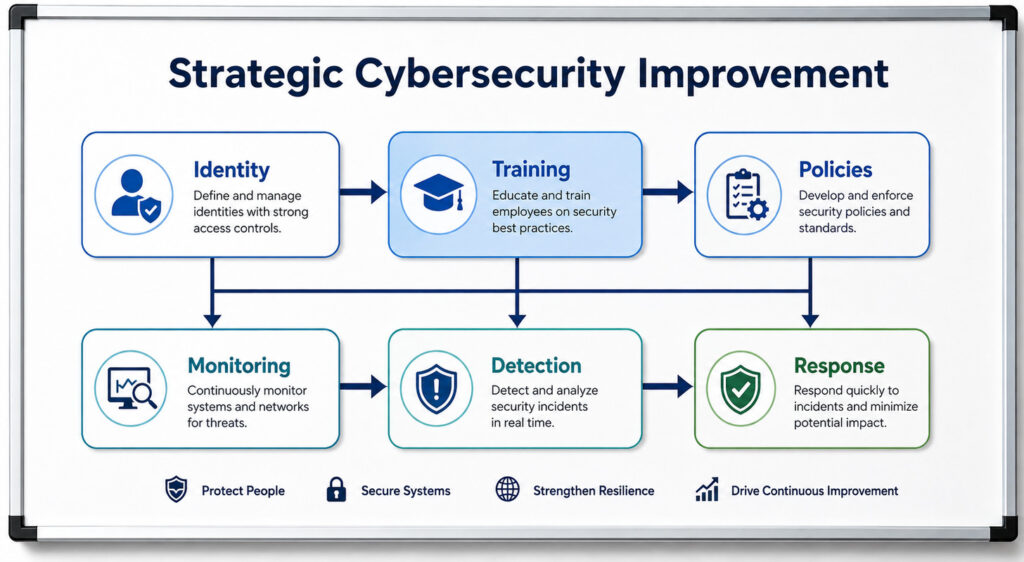
Use a simple risk-based plan. First protect identity, backups, exposed systems, and sensitive data. Then improve monitoring, vendor controls, response exercises, and compliance records. Make sure every task has an owner, a deadline, and a way to measure progress.
First 30 days
Close urgent gaps that attackers can exploit quickly.
- Turn on MFA for priority accounts.
- Patch internet-facing systems.
- Confirm backup access and restore one file.
Next 60 days
Build repeatable controls across the company.
- Run cybersecurity training.
- Review employee and vendor access.
- Improve endpoint and network protection.
By 90 days
Test whether the program works under pressure.
- Run an incident exercise.
- Review key system logs.
- Update policies and risk records.
Build Security Through Consistent Practice
The most serious cybersecurity mistakes are often preventable. Strong passwords, multi-factor authentication, regular training, timely updates, tested backups, careful access control, and useful monitoring create a stronger foundation.
No organization can remove every risk. The goal is to reduce exposure, detect threats sooner, and recover with less disruption. Review this checklist with your employees and security professionals, then improve one high-value control at a time.